How to Remove a Stuck Bike Pedal
Remove a stuck bike pedal by confirming thread direction, using the correct tool with full engagement, supporting the crank, and applying controlled leverage.
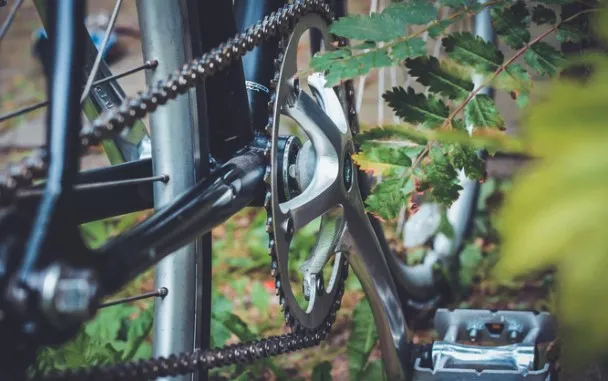
Remove a stuck bicycle pedal by first confirming which side you are working on, selecting the pedal’s correct wrench interface, and turning in the correct loosening direction with controlled leverage. The right pedal has a conventional thread; the left pedal has a left-hand thread.
Confirm the loosening direction
Viewed from the outside of the bike:
- The right, drive-side pedal loosens counterclockwise.
- The left, non-drive-side pedal loosens clockwise.
Another way to remember it is that both pedals loosen when turned toward the rear of the bike at the top of their rotation. Still identify the side before applying force. Park Tool’s pedal removal guide illustrates the thread directions and suitable wrench positions.
Choose the correct tool
Some pedals use 15 mm wrench flats near the crank. Others use an internal hex socket at the end of the spindle, commonly 6 mm or 8 mm, but the exact size varies. A thin pedal wrench may fit where a general open-end wrench does not.
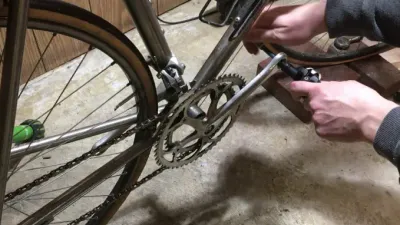
Use a long, sound tool of the exact size. Seat it fully and position the crank so your hands will not strike the chainring, frame, floor, or spokes if the pedal releases suddenly. The Allen-wrench pedal guide focuses on pedals with an internal hex fitting.
Use controlled leverage
- Shift the chain onto the largest chainring if that safely covers exposed teeth.
- Stabilize the bike on the floor or in a suitable stand.
- Position the crank and tool so you can press smoothly rather than jerk.
- Confirm the loosening direction one more time.
- Hold the tool square to the flats or socket and apply steadily increasing force.
- Once the pedal breaks free, turn it by hand while supporting its weight.
Do not strike the wrench or crank with a hammer. Do not use a torch or uncontrolled heat near paint, carbon, bearings, seals, or lubricant.
What if the pedal still will not move?
Check the pedal or crank manufacturer’s service guidance before applying any penetrant. A material-compatible product may help at the threads, but it needs time and must stay off braking surfaces. Penetrating oil does not repair cross-threading or corrosion damage.
If the pedal remains seized, remove the crank only according to the exact crankset procedure or take the bike to a shop. More leverage can strip the crank threads, break a tool, or delaminate a carbon arm.
Inspect and reinstall
Clean and inspect both sets of threads. A pedal should thread into the correct crank by hand for several turns. Stop if it binds or sits crooked. Apply the thread preparation specified by the pedal or crank maker and tighten to that exact model’s specification.
The pedals are side-specific. Never force the left pedal into the right crank or vice versa. If replacement is needed, the mountain-bike pedal guide compares current flat and clip-in choices. The Shimano pedal removal guide covers model-specific differences, while the bike tool-kit guide helps identify proper hand tools.
This article is research-based and intentionally omits a universal torque value.