Best Bike Helmets with Lights
The Lumos Ultra E-Bike is our current lighted-helmet pick for integrated front and rear LEDs and its e-bike helmet certification. Fit still comes first.

The Lumos Ultra E-Bike is our best current helmet with integrated lights because the current Lumos product page lists front and rear LEDs, CPSC compliance, and NTA 8776 certification. It is expensive, and its integrated lights do not replace a properly aimed bike-mounted headlight.
This is a research-based recommendation. We verified the exact Amazon listing and current availability on July 26, 2026, and checked the product identity against Lumos material. We did not crash-test, fit-test, or measure runtime.
Best overall: Lumos Ultra E-Bike

Lumos Ultra E-Bike Smart Helmet
4.5 out of 5 (399 ratings, as of July 26, 2026)
- Integrated front and rear LEDs
- NTA 8776 certification
- App-connected controls
Pros
- Front and rear lighting in one helmet
- Certification stated for higher-speed e-bike use
- Current exact-ASIN listing verified
Cons
- Costs more than a conventional helmet
- Built-in lights require charging
- Still needs a separate road-illuminating headlight
Lumos identifies this exact helmet family as NTA 8776 certified and equipped with integrated front and rear LEDs. NEN’s certification guidance explains that a certified speed-pedelec helmet may carry the NTA 8776 marking and must be entered in the public register by the certifying body and NEN. Check the marking inside the delivered helmet rather than relying only on a store listing.
Certification does not make one size fit every head, and it does not eliminate the need to follow local bicycle-lighting rules.
How we chose
We looked for a current exact-ASIN product, integrated lighting at both ends, a clear manufacturer identity, and a stated helmet certification. We rejected the idea that more LEDs automatically make a helmet safer.
We did not award points for unverified crash claims, advertised visibility distances, or customer-review language. The CPSC bicycle-helmet requirements require proper-fit instructions, a compliance label, and a warning to replace a helmet after an impact.
Fit before features
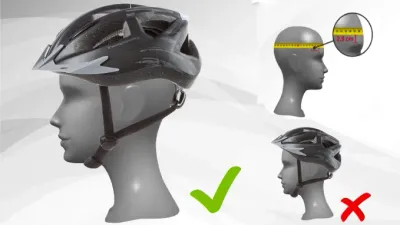
Measure your head, use the exact model’s chart, and try the helmet in the riding position. Our helmet measurement guide explains the process. The shell should sit level and remain stable when the straps are adjusted.
Return a helmet that creates pressure points, rolls forward, or exposes the forehead. Integrated lights cannot compensate for poor fit.
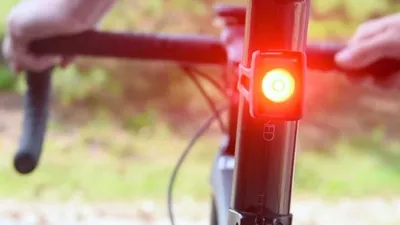
Treat the LEDs as conspicuity lights
Helmet lights move with your head. That can help others notice you, but it can also aim light into another person’s eyes. Use a steady, properly aimed handlebar light to illuminate the road after dark.
Read daytime lights versus headlights before relying on any helmet LED. If you prefer a conventional helmet, the helmet-light mounting guide explains approved accessory mounts.
Charge the helmet before riding and follow the maker’s battery-care instructions. Replace it after an impact or when the manufacturer requires.