Schwinn Ranger 26 Review: Is It Worth Buying Used?
A used Schwinn Ranger 26 can suit easy rides when it fits and passes a complete safety check. Inspect its frame, fork, wheels, brakes, and drivetrain.
Table of Contents
A used Schwinn Ranger 26 can be a practical neighborhood, path, or mellow-trail bicycle when it fits and passes a complete mechanical inspection. Buy the condition in front of you, not the Ranger name. Age, assembly, storage, wear, and repairs matter more than a seller’s feature list.
This is a research-based used-bike guide. We did not ride or inspect the bicycle shown here. Specifications changed across Ranger versions, retailers, and years, so no current product-page specification should be transferred to an unidentified older bike.
Stop before the test ride
Do not ride a bicycle with a cracked or bent frame or fork, loose steering, an unsecured wheel, a damaged tire or bead, ineffective brakes, loose cranks or pedals, or a derailleur that can contact the spokes. Have a qualified bicycle mechanic inspect any uncertainty.
Current Ranger page and older bikes are different evidence
Schwinn’s current Ranger 26 page displayed a price and an Add to Cart control during our August 19, 2026 inspection. The page did not expose the selected color or size, an explicit stock or availability state, or a readable full model code in the evidence we retained. Those details remain unknown.
That current page proves that Schwinn publishes a Ranger 26 page. It does not identify the older Ranger shown in a used listing, confirm its components, or make an old bicycle a current recommendation. Do not copy the current page’s frame, drivetrain, brake, tire, warranty, or intended-use statements onto a legacy bike without an exact identity match.
A name on the top tube cannot replace an inspection.
What a used Ranger may be good for
A sound, correctly fitted example may work for neighborhood streets, paved paths, firm gravel, and mellow terrain. Treat any suspension fork and knobby tire as components to inspect, not proof that the bicycle is suitable for aggressive riding.
Do not use an unidentified older Ranger for jumps, drops, bike-park features, or fast technical descents. Its frame history, fork condition, wheel strength, brake setup, and prior assembly are unknown until someone evaluates the actual bicycle.
The purchase decision is simple: it must fit, stop, steer, roll, and shift safely, and its required repair cost must still make sense. Walk away when the seller will not allow a careful inspection.
Fit before features
Wheel diameter does not determine rider fit. Check standover clearance, reach, handlebar height, saddle range, and access to both brake levers. The seatpost must remain past its minimum-insertion mark, and the rider should be able to start, stop, and dismount without losing control.
Use the mountain-bike sizing guide as a starting point. A seller’s height range cannot replace a test fit because frame dimensions can vary among bicycles that share a wheel size or product-family name.
Complete used-bike inspection
Frame, fork, and suspension
Clean enough dirt to see the frame and fork. Inspect welds, tubes, dropouts, suspension mounts, and the head-tube area in bright light. Reject cracks, deep dents, bent parts, spreading corrosion, separated joints, or suspicious paint lines that open under light loading.
Hold the front brake and rock the bike gently. A knock can indicate headset, brake, or fork play. Compress the fork without riding. Stop if it binds, scrapes, leaks, shifts at its mounts, or has unexplained looseness. Do not attempt aggressive terrain on an old budget fork with unknown service history.
Steering
Turn the handlebar slowly through its range. It should move smoothly without binding, cables pulling tight, or the bar contacting the frame. Confirm that the stem and handlebar cannot twist independently of the front wheel under a cautious stationary check.
A loose, corroded, bent, or incorrectly assembled steering system needs professional attention before any test ride.
Wheels and tires
Verify both wheels are secured by the correct retention system. Spin them and watch the rim and tire from the front or rear. A large side-to-side or vertical movement, broken spoke, loose hub, damaged axle, cracked rim, or tire bead that does not sit evenly is a stop-riding condition.
Inspect tread and sidewalls for cuts, exposed casing, bulges, dry cracking, or rubber separating from the casing. Our rear-wheel wobble guide explains how tire seating, rim trueness, hub play, and axle faults differ.
Brakes
Identify the brake type on the exact bike rather than assuming it from another Ranger. Inspect pads, cables or hoses, braking surfaces, mounting hardware, and lever travel. Each lever must stop its wheel before reaching the grip.
Test at walking speed only after the stationary checks pass. Stop if a brake is weak, contaminated, frayed, loose, badly aligned, or unable to stop the wheel predictably.
Cranks and pedals
Move each crank arm side to side and rotate the pedals. Loose cranks, damaged pedal threads, rough bearings, a bent axle, or a pedal that can pull away from the crank needs repair before riding. Confirm both pedals are fitted to the correct side and fully secure.
Drivetrain
Inspect the chain, chainrings, rear cogs, derailleurs, and shifter cables. Shift under light pedal pressure only. Stop if the chain skips under modest load, falls off repeatedly, or a rear derailleur can move into the spokes.
Rust, hooked teeth, stiff links, frayed cables, and several worn parts together can turn a cheap bicycle into an expensive repair.
Calculate repair cost before buying
Price the immediate work, including tires, tubes, wheel service, brake pads and cables, chain and gears, bearings, fork work, and shop labor. Add safety equipment and any professional inspection the bicycle needs.
Compare that total with a current, correctly sized hardtail in the mountain bikes under $500 guide. A low asking price is not value when safety-critical repairs exceed the cost difference.
Research limits and update method
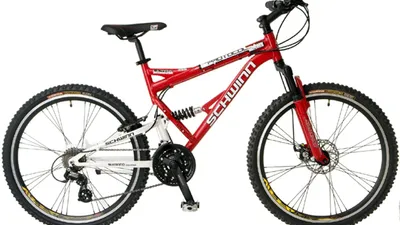
We inspected the current Schwinn Ranger 26 page, current live search results, the unchanged production review, and the exact legacy hero on August 19, 2026. The hero is a 300 by 221 pixel legacy product image with retained checksum provenance. It helps identify the subject of this historical review, but it does not prove a current variant, stock state, specification, warranty, or test.
The CPSC bicycle requirements overview identifies assembly, braking, structural integrity, and reflectors among regulated bicycle safety areas. A used-bike inspection is not a certification, and a general checklist cannot replace the instructions for the exact components.
Verdict
Consider a used Schwinn Ranger 26 only when the exact bicycle fits, passes the frame, fork, steering, wheel, tire, brake, crank, pedal, and drivetrain checks, and remains inexpensive after repairs. Stop riding for any structural or control-system defect. Keep it to ordinary recreation and mellow terrain unless a qualified inspection supports more.