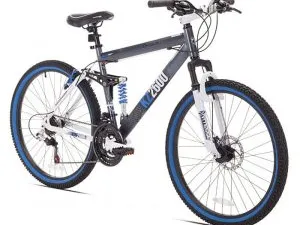
Schwinn Protocol 1.0 Review: What Used Buyers Should Know
Our Schwinn Protocol 1.0 review covers conflicting specs, used-bike risks, price factors, and two current hardtail alternatives for budget mountain biking.

The Schwinn Protocol 1.0 in this review is an older 26-inch dual-suspension used bike, not a current model recommendation. It can still suit pavement, paths, gravel, and gentle dirt when the exact bicycle fits and passes a mechanical inspection. Its value depends on condition and repair cost, not an old list price or a familiar name.
This is a research-based used-bike guide, not a ride test. Current search results mix several Protocol records. We rechecked the available records and current alternatives on August 19, 2026 and keep them separate below.
Bottom line
Buy an older Protocol only after the frame, fork, shock, pivots, wheels, brakes, steering, and drivetrain pass inspection. A cheap bike that needs several major repairs is not a bargain.
Which Schwinn Protocol is this?
The photographed and reviewed bike is the older red, 26-inch, dual-suspension version. Historical summaries commonly associate that version with a 24-speed drivetrain, suspension fork, rear shock, front mechanical disc brake, and rear rim brake. Those details are identification clues, not a substitute for reading the components on a particular used bicycle.
The Protocol name was reused. Current search results also surface later hardtail records and Amazon URLs that do not reliably preserve one product identity. An August 19 Amazon request for a current-looking Protocol URL resolved to unavailable ASIN B07MV4YS7K, model S2756AAZ. Its returned record labeled the style Protocol 1.0 but contained conflicting speed and frame-material details. It is therefore evidence of a discontinued legacy listing only—not a current offer, successor, price source, or dependable parts specification.
Check the serial number, frame decals, wheel and tire markings, fork, shock mounts, brakes, shifters, derailleur, crank, and axle hardware on the actual bicycle. The name “Protocol 1.0” cannot tell you its year or complete build.
Quick used-bike decision
| Question | Continue only when… |
|---|---|
| Does it fit? | Standover, reach, saddle range, and brake-lever access work for the rider |
| Is the frame sound? | No cracks, separated welds, major dents, bent sections, or damaged mounts are visible |
| Is suspension serviceable? | Fork, shock, and pivots move without leaks, sticking, knocking, or side play |
| Are wheels and brakes safe? | Wheels are retained, rims and tires are sound, and both brakes stop the bike correctly |
| Is the price rational? | Purchase plus immediate repairs remains below a better-fitting supported alternative |
Why online specifications conflict
Later databases and listings can describe a hardtail while older reviews describe the dual-suspension bicycle shown here. Sellers may copy a specification table from a different year or wheel size. Even apparently precise phrases such as “Ultra Aluminum” do not identify the fork, shock, brake interface, freewheel or cassette, axle, seatpost, or bearing sizes.
Use photographs and measurements. Record the tire sidewall size, rim markings, spoke count, rotor diameter, rear brake type, axle threading, derailleur model, number of rear cogs, chainring tooth counts, seatpost diameter, handlebar clamp, headset style, and shock-mount dimensions. A general Schwinn owner manual supplies safety principles but should not be used to invent a component torque or replacement size.
Is a used Protocol still worth buying?
A sound example can be a serviceable casual bicycle. Common 26-inch tires, tubes, cables, chains, and many brake consumables remain available when matched exactly. Broad gearing can help on ordinary hills, and the control layout will feel familiar to many riders.
The rear suspension is the financial risk. A shock, bushings or bearings, mounts, and pivot fasteners add wear points to a low-value bike. Movement when you press the saddle does not prove proper damping or safe hardware. A leaking shock, cracked mount, loose pivot, bent fork, damaged frame, or uncertain replacement fit is a stop condition.
Do not buy it for jumps, drops, downhill riding, or demanding technical trails. Age, unknown service history, and entry-level suspension make those uses a poor assumption even if the bike survives a brief parking-lot ride.
Inspection checklist before paying
Frame and suspension
Clean the head tube, down tube, bottom bracket area, shock mounts, pivots, chainstays, seatstays, and dropouts. Inspect in bright light from both sides. Walk away from a crack, separated weld, deep dent, bent tube, missing fastener, damaged dropout, or movement at a structural joint.
Compress the fork and rear suspension while the bike is stationary. Look for oil, scraping, sticking, uncontrolled rebound, knocking, and lateral movement. Do not tighten an unknown pivot or shock bolt by guesswork.
Wheels, tires, and brakes
Spin each wheel and watch both the rim and tire. A tire wobble can come from poor bead seating even when the rim is straight; rim movement can point to spoke, rim, hub, or axle trouble. Push the rim laterally to feel for hub play.
Read the complete tire size and pressure range. Check casing cracks, exposed cords, cuts, bulges, and even bead seating. Apply each brake separately while pushing the bike. The lever must not reach the grip, and the wheel must remain secured. Severe rotor damage, a worn rim braking surface, leaking components, or uncertain brake compatibility requires qualified service.
Steering and drivetrain
Hold the front brake and rock the bike to test for headset play. Turn the bars slowly for binding. Check that the stem and handlebar do not rotate independently. Move both crank arms laterally, inspect pedal threads, measure chain wear, and watch the derailleur’s clearance from the spokes.
During a cautious test ride in a safe area, shift through every gear and test each brake progressively. Stop immediately for loose steering, wheel retention, brake failure, a moving crank or pedal, a damaged tire, or unexpected suspension movement.
Two current hardtail alternatives
Neither alternative is an official Protocol successor. They are current recreation hardtails with fewer frame pivots, current manufacturer records, and exact listings that can be checked.
Schwinn High Timber ALX 26
Schwinn’s High Timber ALX 26, model S8216AZ, has a documented 16.5-inch aluminum frame, 26-inch wheels, suspension fork, 21-speed drivetrain, and mechanical disc brakes. On August 19 the selected ASIN B08239YG6B record was available from Amazon.com and matched S8216AZ and its exact mapped image.
The ASIN remains a family listing. Confirm every selected attribute before ordering; never transfer specifications from one High Timber variant to another.
Closest current Schwinn alternative

Schwinn High Timber Amazon Family Listing
4 out of 5 (1,526 ratings, as of August 19, 2026)
A supported recreation hardtail when the exact S8216AZ configuration and frame fit.
Best for: Pavement, paths, gravel, and mellow trails
Check price on Amazon- Frame
- 16.5-inch aluminum hardtail
- Wheels
- 26-inch
- Drivetrain
- 21-speed
- Brakes
- Mechanical disc
Why we picked it
- Current manufacturer model page
- Simpler than an aging dual-suspension frame
- Exact selected record was available
Watch-outs
- Family listing can change variant
- One documented frame size
Considerations
Confirm selected model S8216AZ, seller, image, size, and components at checkout.
Mongoose Grafton 26
The selected Grafton is a 17-inch aluminum hardtail. Keep the 26-inch selection separate from other Grafton variants. The exact ASIN B0BRBT2Y4X was available from Amazon.com on August 19, with its mapped Grafton image and selected configuration exposed. Compare the selected wheel size and frame against the current Grafton manufacturer record.
Current hardtail alternative

Mongoose Grafton 26 Amazon Listing
3.5 out of 5 (185 ratings, as of August 19, 2026)
A simpler recreation-bike comparison when its exact selected size fits.
Best for: Streets, gravel, and mellow trails
Check price on Amazon- Frame
- 17-inch aluminum hardtail
- Wheels
- 26-inch
- Drivetrain
- 21-speed
- Fork
- Front suspension
- Brakes
- Mechanical disc
Why we picked it
- Current manufacturer support
- Available exact ASIN snapshot
- No rear suspension pivots
Watch-outs
- Variant and fit still require checkout verification
- Entry-level fork and drivetrain
Considerations
Match the selected wheel size, frame, seller, image, and components; budget for final assembly.
How much should you pay?
There is no dependable national Protocol 1.0 price. Asking prices are not completed sales, and two visually similar bikes can have very different repair needs. Add the purchase price to immediate tires, tubes, cables, brake work, chain and drivetrain parts, wheel service, suspension work, and labor.
Compare that total with a correctly sized current hardtail. If the old bike needs several systems repaired, the supported bicycle is usually the clearer value. Never let money already spent justify riding a damaged frame, fork, wheel, tire, brake, or steering component.
Verdict
Buy the older Schwinn Protocol 1.0 only as a condition-dependent used bicycle. Verify which record is physically in front of you, insist on a safe fit, and price every needed repair before paying. Avoid any listing that treats a later Protocol record as proof of the older dual-suspension bike’s parts.
For most riders choosing between an uncertain used Protocol and a current hardtail, the simpler supported hardtail is easier to fit, inspect, and maintain.