What can I Use to lubricate my Bike Chain?
Use a purpose-made bicycle chain lubricant selected for your riding conditions. Learn why household oils, grease, and motor oil are poor substitutes.

Use a purpose-made bicycle chain lubricant. Choose a wet, dry, all-weather, or wax-based product according to the lubricant maker’s instructions and your riding conditions. Household oils, cooking oil, automotive motor oil, and thick grease are not good routine substitutes.
If you do not have chain lubricant, the safest choice is to clean and dry the chain, then wait until you have the correct product. A temporary household substitute can attract dirt, wash away, contaminate nearby components, or fail to protect the chain where it moves.
Why a bicycle chain needs the right lubricant
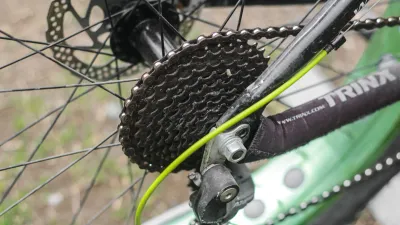
A chain pivots at every link as it engages the chainring, cassette, and derailleur pulleys. Lubricant needs to reach the rollers and internal bearing surfaces, remain useful under load, and avoid collecting more contamination than necessary.
The outside plates do not need to stay visibly wet. A heavy film on the exterior attracts grit, which can accelerate wear. Park Tool’s bicycle lubricant guide distinguishes chain lubricants from greases, assembly compounds, and other products that have different jobs.
Which bike chain lubricant should you choose?
Follow the label because formulas vary, but these broad categories can help:
Dry-condition lubricant
Dry lubes are intended for dusty, dry conditions. Many use a light carrier that evaporates and leaves the lubricating material behind. They generally need to be applied to a clean, dry chain and allowed to set before riding.
Wet-condition lubricant
Wet lubes are designed to resist water and remain on the chain in rain or mud. They can hold more dirt if too much remains on the outside, so wiping off excess is important.
All-weather lubricant
All-weather formulas balance water resistance and cleanliness for riders who encounter mixed conditions. The label should explain application and curing time.
Drip wax or hot-melt wax
Wax systems can run clean when the chain is prepared and maintained correctly. Some require thorough removal of factory grease and old oil. Do not mix wax and conventional lubricant without checking the product maker’s compatibility instructions.
Our mountain-bike chain lube guide compares the practical tradeoffs for wet trails, dust, and frequent washing.
Products not to use as routine chain lubricant
The old version of this article recommended several household and automotive substitutes. We have removed those recommendations.
Cooking oil
Olive, vegetable, and other cooking oils are not formulated for a bicycle drivetrain. They can oxidize, become sticky, collect dirt, and provide inconsistent protection.
Automotive motor oil
Motor oil is designed for a closed engine lubrication system, not an exposed bicycle chain. It is difficult to apply cleanly and can hold grit on the drivetrain.
Thick grease
Grease is useful for certain bearings, threads, and interfaces when specified by a manufacturer. It is too thick and dirt-attracting to use as an exterior chain lubricant.
Penetrating or water-displacing sprays
These products may help loosen parts or displace moisture, depending on their instructions, but that does not make every spray a durable final chain lubricant. If the manufacturer does not identify the product for bicycle-chain lubrication, follow with an appropriate chain lube.
Silicone spray
General silicone sprays vary widely and can migrate to braking surfaces. Do not spray lubricant near disc rotors, brake pads, rims used for braking, or tires.
How to lubricate a bike chain
Start with a reasonably clean, dry chain. If it is gritty or heavily contaminated, follow our guide to cleaning a bike chain with household products or use a bicycle-specific degreaser.
Then:
- Support the bicycle securely and keep fingers clear of moving parts.
- Place the applicator above the lower section of chain.
- Apply one small drop to each roller while slowly turning the cranks backward.
- Let the lubricant penetrate or cure for the time on the label.
- Wipe the outside of the chain with a clean rag until it no longer leaves a heavy oily film.
Do not spray toward a disc-brake rotor or rim braking surface. Contaminated brake pads may need replacement according to the brake manufacturer’s instructions.
When should you reapply chain lubricant?
There is no universal mileage interval. Inspect and lubricate based on conditions and the product’s directions.
Reapply when:
- The chain sounds dry or squeaks
- Rain or washing has removed the lubricant
- Mud, grit, or dust requires a full cleaning
- Surface rust begins to appear
- The lubricant maker’s stated interval has been reached
Do not keep adding fresh lubricant over a dirty chain. Wipe or clean it first so you are not carrying abrasive contamination deeper into the links. For corrosion, see our guide to dealing with rust on a bike chain.
Frequently asked questions
Can I use WD-40 on a bike chain?
WD-40 is a brand with multiple products, so check the exact label. A general-purpose water-displacing spray is not automatically a durable chain lubricant. WD-40 also sells bicycle-specific chain products, which should be used according to their own instructions.
Can I use olive oil or vegetable oil?
No. Cooking oils can become sticky, attract dirt, and are not formulated for the loads and contamination of an exposed bicycle chain.
Is grease good for a bike chain?
Not as an exterior chain lubricant. Grease is too thick and holds dirt. Use grease only where the bicycle or component manufacturer specifies it.
Is it bad to ride with a dry chain?
A dry, noisy chain can wear faster and shift poorly. If the chain is rusty, stiff, damaged, or excessively worn, lubrication alone may not fix it. Inspect or replace it before riding.
Bottom line
Use a bicycle-specific chain lubricant matched to your conditions, apply it to each roller, allow it to set, and wipe off the excess. If the right product is not available, wait rather than coating the drivetrain with cooking oil, motor oil, or grease.