Best Chain Lube for Mountain Bikes
SILCA Super Secret suits prepared drivetrains; Finish Line Wet handles wet rides; Muc-Off Bio Dry suits dusty trails. Compare prep and weather trade-offs.
The best mountain-bike chain lube depends on trail conditions and maintenance habits. SILCA Super Secret is the best clean-running choice for a thoroughly prepared drivetrain. Finish Line Wet is the practical pick for sustained wet conditions, while Muc-Off Bio Dry suits dry, dusty riding.
No lube fixes a worn, rusty, or contaminated chain. Clean and inspect the drivetrain first, then follow the chosen product’s preparation and cure instructions.
If the chain is being replaced, size the new one from the current drivetrain instructions before lubrication.
The best mountain-bike chain lubes at a glance
| Pick | Best for | Main trade-off |
|---|---|---|
| SILCA Super Secret | Riders willing to prepare a chain for drip wax | Demanding initial cleaning and cure |
| Finish Line Wet | Rain, mud, and frequent water exposure | Wet film can collect more grime |
| Muc-Off Bio Dry | Dry and dusty trails | Needs reapplication after wet rides |
1. Best clean-running option: SILCA Super Secret
SILCA Super Secret is a drip wax intended for a very clean, dry chain. SILCA’s application guidance says wax works best when it can bind directly to clean metal. This makes it a strong fit for riders who value a cleaner exterior and will do the initial preparation.
It is not the easiest switch from an oily lube. Residual oil can interfere with wax adhesion, and the product needs time to dry before riding.

Best clean-running option
SILCA Super Secret Chain Lube
4.7 out of 5 (1,490 ratings, as of July 26, 2026)
Best when clean running matters enough to justify the prep.
A drip wax for use on a stripped, dry bicycle chain or as a hot-wax top-up.
Best for: Prepared drivetrains and riders who want a drip-wax system
Key specifications: Wax-based drip lubricant; precision applicator; compatible with SILCA hot wax
Trade-off: Requires thorough chain preparation and drying time.
- Drip-wax application
- Designed for a clean and dry chain
- Can top up SILCA hot wax
Pros
- Dry coating sheds less surface grime than a wet oil
- Works within a documented wax system
- Multiple bottle sizes
Cons
- Initial degreasing takes work
- Must dry before use
Considerations
Follow SILCA's cleaning and cure instructions. Do not apply it over an oily chain and expect normal wax performance.
2. Best for wet conditions: Finish Line Wet
Finish Line Wet leaves a wet oil film designed for rain, mud, and prolonged water exposure. The manufacturer’s Wet Lube page positions it as the brand’s most water-resistant chain lubricant.
That durability comes with more cleanup. Apply it to the rollers, allow it to penetrate, and wipe the chain’s exterior thoroughly. Excess oil attracts trail grit.
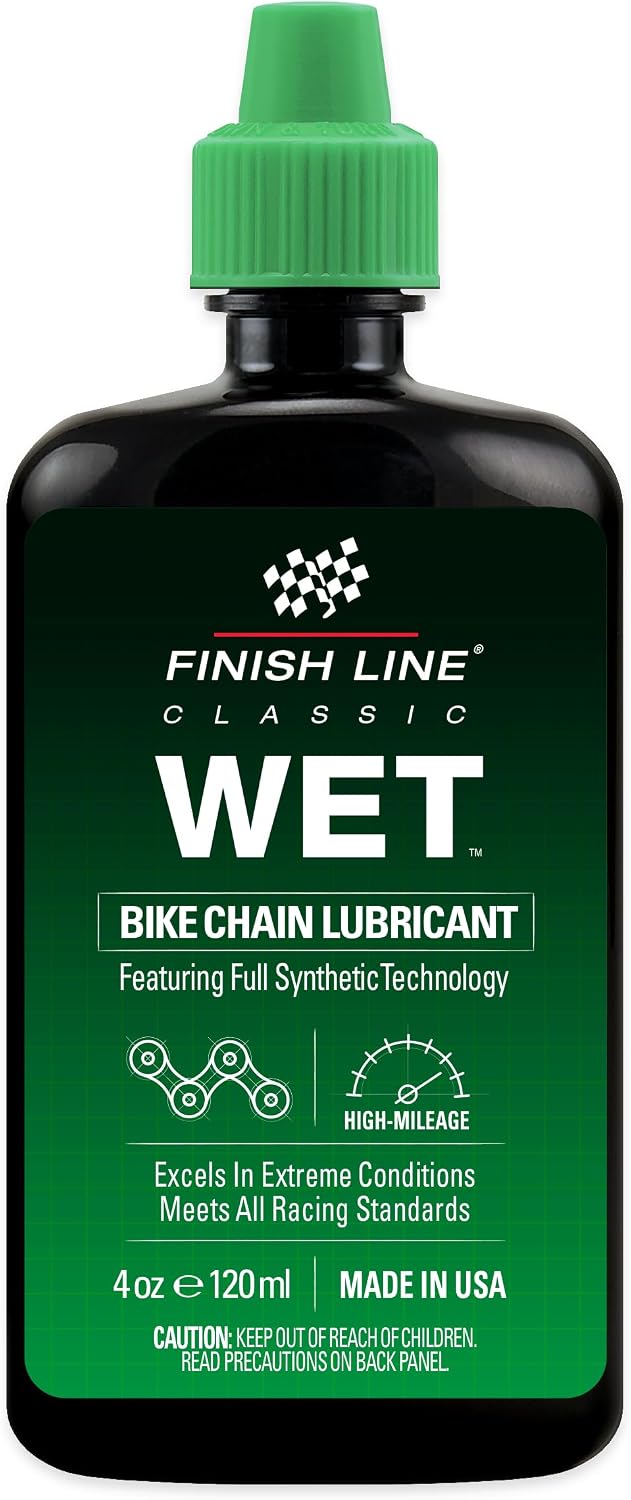
Best for wet conditions
Finish Line Wet Bike Chain Lubricant, 4 oz
4.7 out of 5 (4,203 ratings, as of July 26, 2026)
The sensible choice for genuinely wet rides, not a default for dusty trails.
A water-resistant wet-style lubricant for bicycle chains in harsh conditions.
Best for: Rain, mud, wet commutes, and riders who prioritize water resistance
Key specifications: Wet-film synthetic lubricant; drip bottle; bicycle-chain application
Trade-off: The wet film attracts more dirt and needs careful wiping.
- Wet-film lubrication
- Designed for water resistance
- Drip application
Pros
- Better suited to repeated wet exposure than a dry lube
- Simple application process
- Widely established product line
Cons
- Collects grime if excess is left outside the rollers
- Messier drivetrain than a well-prepared wax system
Considerations
Keep all lubricant away from rotors, pads, and rim-brake tracks.
3. Best for dry and dusty trails: Muc-Off Bio Dry
Muc-Off Bio Dry uses a wax-based dry-weather formula. Muc-Off’s current product page calls for a clean, dry chain, application to the inside of the links, wiping excess, and drying before use.
It is easier to apply than a full wax conversion, but it is not the right choice for persistent rain. Reclean and relubricate after a wet ride as the manufacturer directs.

Best for dry and dusty trails
Muc-Off Bio Dry Bike Chain Lube, 4.06 fl oz
4.7 out of 5 (17,520 ratings, as of July 26, 2026)
A practical dry-trail lube when a full wax-prep routine feels excessive.
A dry-weather bicycle chain lubricant designed to resist dusty contamination.
Best for: Dry weather, dusty trails, and straightforward drip application
Key specifications: Wax-based dry-weather formula; pipette application; bicycle drivetrain use
Trade-off: Not the best match for sustained wet conditions.
- Dry-weather wax-based formula
- Pipette applicator
- Manufacturer-documented drying period
Pros
- Suited to dusty trail conditions
- Straightforward on-bike application
- Clear manufacturer instructions
Cons
- Less suitable for prolonged rain
- Still requires a clean and dry drivetrain
Considerations
Reapply based on conditions and chain noise, following the label rather than a fixed mileage claim.
How we chose
This refresh is based on current product research, not new hands-on or side-by-side testing. DataForSEO surfaced current Amazon listings, and Bright Data verified each exact ASIN, availability, rating, rating count, and primary image on July 26, 2026. Manufacturer pages supplied use-case and application evidence.
We excluded the old list’s fork lubricant, carbon assembly compound, and general-purpose lubricant because they do not answer the chain-lube intent.
How to apply chain lube safely
Clean and dry the chain as the lube maker requires. Apply to the rollers, let the product penetrate or cure, and wipe excess from the outer plates. Keep lubricant away from every braking surface.
If the chain has rust or stiff links, start with the rusted-chain guide. For cleaning support, use the chain-cleaning guide and cassette-cleaning procedure. The broader chain-lubricant guide explains why cooking oil and household products are poor substitutes.