
Bike Mirror Helmet vs. Handlebar: Best Mirror for Bike
Helmet mirrors move with your head and offer a compact view. Handlebar mirrors are steadier and easier to share. Compare fit, view, vibration, and trade-offs.
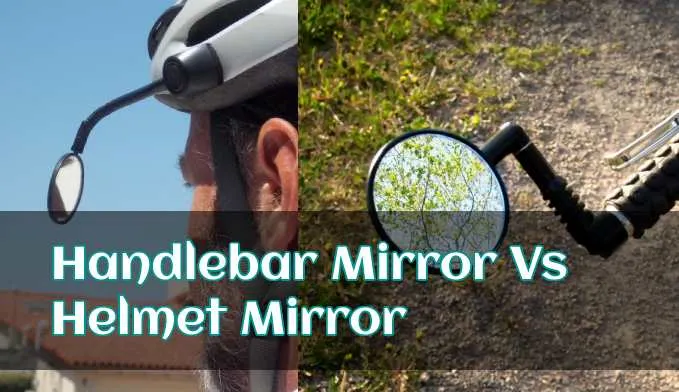
A handlebar mirror is the easier choice for most commuters because its position stays fixed and its glass can be larger. A helmet mirror is better when you want the view to follow your head, use several bikes, or have no suitable handlebar mounting space.
Neither type replaces a shoulder check. The NHTSA bicycle-safety guidance tells riders to scan for traffic and signal before turning. A mirror adds information, but it also has blind spots.
This comparison is research-based. We did not conduct side-by-side vibration or field-of-view testing.
Helmet and handlebar mirrors at a glance
| Factor | Helmet mirror | Handlebar mirror |
|---|---|---|
| View direction | Changes as you turn your head | Stays aligned with the bike |
| Typical viewing area | Smaller and closer to the eye | Often larger |
| Bike-to-bike use | Moves with the helmet | Usually remains on one bike |
| Vibration | Depends on arm and helmet mount | Depends on bar, mount, and road |
| Setup sensitivity | High; small angle changes matter | Moderate |
| Main trade-off | Can distract or catch objects if poorly placed | Uses bar space and can widen the bike |
When a helmet mirror works best
A helmet mirror can be useful for touring, commuting on different bikes, or riding a recumbent where a normal bar mirror has a poor angle. A small head movement changes the view, letting the rider scan a wider area.
That sensitivity takes practice. Set the mirror at the edge of your normal vision, not directly in front of an eye. The arm and mount must not interfere with straps, vents, fit, or the helmet shell. Never drill, cut, or modify a helmet unless its manufacturer explicitly permits it.
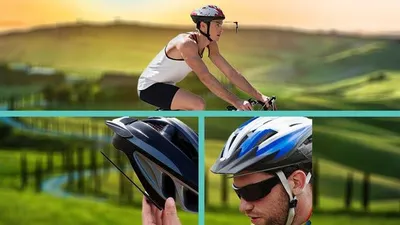
Read how to attach a helmet mirror before fitting one, and recheck helmet fit with our head-measurement guide.
When a handlebar mirror works best
A handlebar mirror gives a consistent reference point and usually provides a larger image. It suits city bikes, hybrids, e-bikes, and riders who do not want hardware near their face.
Compatibility is the catch. Clamp diameters, grips, shifters, brake levers, bar-end plugs, and swept bars all affect placement. A mirror must not restrict a brake lever, cable, control, or full steering movement.
Bar-end mirrors keep the center of the handlebar clear, but they can add width and are more exposed when the bike leans against a wall. Inboard mirrors are protected but may show the rider’s arm or torso.
How to choose
Choose a helmet mirror when:
- you regularly switch between bikes;
- you want to aim the view with your head;
- the bike lacks a safe, compatible bar position;
- the maker confirms the mount works with your helmet.
Choose a handlebar mirror when:
- you prefer a fixed image;
- you want a larger viewing area;
- only one bike needs the mirror;
- your controls leave a secure mounting location.
For a current shortlist, see our bicycle helmet mirror guide. If visibility after dark is also a concern, compare daytime lights and headlights.
Set up and practice
Install the mirror according to its instructions, then test it while stationary. Confirm that every control works, the handlebar turns fully, and the helmet still fits correctly. Practice in a traffic-free area until glancing at the mirror does not cause you to drift.
Before every ride, check that the mount is tight and the image is aligned. Stop using a cracked, loose, or sharp-edged mirror. On the road, glance briefly, keep looking ahead, and shoulder-check before changing line.
![How to Attach a Bike Helmet Mirror? [Step-by-Step]](/_astro/How-to-Attach-a-Bike-Helmet-Mirror.C5ex7d6o_Z1OBLcS.webp)