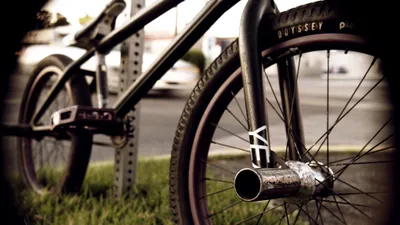
BMX Peg Size Guide: Axle, Length, and Diameter
Match BMX pegs to the exact 3/8-inch or 14 mm axle system, available thread or bolt engagement, peg length and diameter, material, hub guards, and riding surface.

Table of Contents
- BMX peg dimensions at a glance
- 3/8 inch and 14 mm are different interfaces
- Measure usable engagement, not only axle diameter
- Peg length changes stance and clearance
- Outer diameter affects feel and clearance
- Metal versus plastic-sleeved pegs
- How many pegs should you run?
- Compatibility worksheet
- How we researched this guide
- Bottom line
Choose a BMX peg by the exact hub and axle system first, then by peg length, outer diameter, material, sleeve, hub-guard clearance, and riding surface. A peg with a 14 mm bore may include a reducer for a 3/8-inch axle, but that adapter does not create more axle thread, change a female hub bolt, or make an incompatible frame safe.
BMX peg dimensions at a glance
| Field | Common product examples | What to verify |
|---|---|---|
| Axle interface | 14 mm; 3/8 inch, often described as 10 mm; model-specific female bolts | Exact hub, axle or bolt, adapter, washer, nut, and usable engagement |
| Length | Roughly 4 to 5 inches in current freestyle products | Shoe clearance, stance, tricks, frame and fork clearance |
| Outer diameter | Roughly 1.25 to 1.5 inches in current examples | Foot feel, ledge contact, hub-guard and dropout clearance |
| Body | Heat-treated chromoly, aluminum core, or mixed construction | Maker-approved use and impact condition |
| Outer surface | Bare metal or replaceable nylon sleeve | Street/park rules, slide behavior, sleeve orientation and replacement support |
These are shopping fields, not universal fit ranges. Use the exact peg and hub specifications.
3/8 inch and 14 mm are different interfaces
Three-eighths of an inch is 9.525 mm and is often rounded to “10 mm” in BMX catalogs. A 14 mm axle is materially larger. Some 14 mm-bore pegs ship with 3/8-inch reducers; Odyssey’s current MPEG, for example, is a 14 mm peg supplied with 3/8-inch adapters (Odyssey MPEG specifications).
Do not infer fit from that sentence alone. Confirm whether the wheel uses:
- a male axle with external threads and axle nuts;
- a female axle with separate bolts;
- a proprietary collar, cone, washer, or hub-guard system;
- a front or rear interface with different hardware.
A reducer only centers the peg bore on the specified smaller axle. It does not convert metric and inch threads, lengthen an axle, or approve a peg for every female-bolt hub.
Measure usable engagement, not only axle diameter
Adding a peg places material between the dropout and the retaining nut or bolt head. The complete stack can include dropout, hub guard, anti-rotation washer, ordinary washer, peg, and manufacturer-specified hardware. If the axle nut cannot reach the hub maker’s minimum thread engagement or a female bolt no longer reaches its specified engagement, stop.
Do not remove required washers, substitute a longer bolt, reverse hardware, or omit a hub guard unless the hub, frame or fork, and peg makers approve that exact stack. Use the specified fastener torque and reinspection interval. Our BMX peg installation guide covers the safe sequence.
Peg length changes stance and clearance
Longer pegs give the shoe more platform and can extend farther across a ledge or rail. They also increase leverage and are more likely to contact a shoe, crank, chain, frame, fork, or another obstacle.
Current documented examples show why “standard” is too vague:
- Odyssey MPEG: 4 inches long;
- Cult Doomsday: 4 or 4.5 inches;
- Cinema Dak: 4.5 or 4.75 inches;
- BSD Rude Tube: 4.2 inches, with an XL option on some variants.
Choose the exact length that preserves clearances through full crank and wheel rotation and matches the rider’s intended trick and stance. A longer peg is not automatically better.
Outer diameter affects feel and clearance
Larger-diameter pegs can feel more substantial underfoot and change contact with a ledge or rail. Smaller diameters may provide more clearance. Current manufacturer examples range from the 1.25-inch BSD Unit to the roughly 1.5-inch class of sleeved pegs, but neither boundary is a general standard.
Check that the peg clears the dropout, fork leg, frame tube, hub guard, spokes, chain, derailleur or brake parts. The wheel must seat fully in the dropout with every required retention surface flat.
Metal versus plastic-sleeved pegs
Heat-treated chromoly pegs offer a direct metal grinding surface. Replaceable nylon sleeves put plastic at the contact surface and can be replaced when the maker’s wear limits are reached. A plastic sleeve still needs a compatible structural core and correct orientation.
The riding facility controls what is allowed. Some parks prohibit metal pegs or require peg and bar-end protection. Ask before riding; do not assume a material is permitted because it is sold for BMX.
How many pegs should you run?
One, two, three, and four-peg setups all exist. The correct number depends on the tricks, stance, frame and fork approval, hub hardware, wheel build, rider control, and facility rules. Every added peg changes mass, clearance, and the retention stack.
Start only after deciding which side or sides you actually use. Do not install four merely because a product is sold in pairs. Our guide to what bike pegs are used for explains positions and purposes.
Compatibility worksheet
Record these before ordering:
- bicycle, frame, fork, hub, and wheel model;
- front or rear and drive or non-drive side;
- male axle size and thread, or female-bolt size, thread, and approved length;
- dropout slot, thickness, condition, and wheel-seating method;
- required washers, cones, spacers, guards, nuts, and torque;
- peg bore and exact supplied adapter;
- peg length, diameter, body, sleeve, and quantity per package;
- spoke, chain, brake, derailleur, frame, fork, and shoe clearance;
- maker inspection and replacement limits;
- street, park, and event rules.
If a product page gives only “universal” or “fits BMX,” get the missing dimensions in writing or choose a better-documented peg.
How we researched this guide
This is research-based compatibility guidance, not an installation, impact, or grind test. We reviewed current Odyssey, Cult, Cinema, and BSD product specifications to verify the distinctions among axle interfaces, adapters, lengths, diameters, materials, sleeves, and package quantities. The generated hero is illustrative and unbranded.
Bottom line
Identify the exact axle or female-bolt system and prove adequate hardware engagement before comparing length or material. Then choose a diameter and surface that clear the bicycle and comply with the riding location. If the peg requires improvised hardware or reduces wheel retention below the maker’s requirement, it does not fit.