How to Lock a Bike Without a Bike Rack
Learn how to secure a bike without a rack by choosing a permitted fixed anchor, capturing the frame and wheels, and avoiding unsafe lock-up shortcuts.
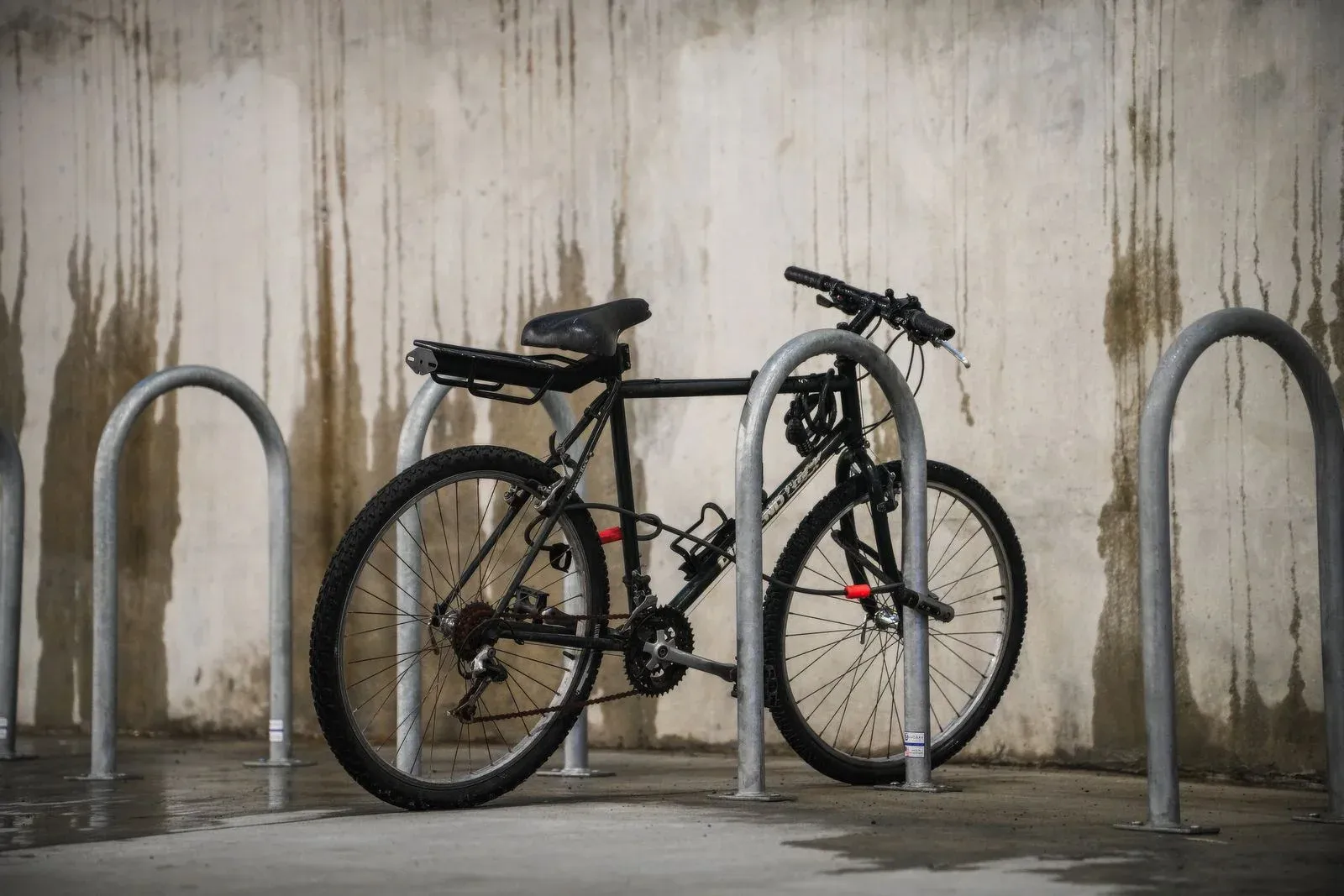
Table of Contents
- What counts as a suitable anchor?
- Which objects should you avoid?
- How should you position the bike?
- How do you lock the frame and wheels?
- What if the lock does not reach?
- What if there is no anchor at all?
- How should you handle quick-release wheels and e-bikes?
- How do you check the completed lock-up?
- Can you improve security without a rack?
- Frequently asked questions
- How we researched this guide
- Bottom line
- Sources
To lock a bike without a bike rack, find a permitted fixed object that cannot be removed, cut easily, or lifted over, then pass the primary lock through a strong part of the frame and the wheel or wheels at risk. Keep the lock close to the frame and anchor without forcing it against a rotor, cable, tire, or paint. If no suitable anchor exists, take the bike inside, use a secure facility, ask the property owner, or leave it. Locking the bike to itself is not a substitute for an anchor, and no lock-up is theft-proof.
Do not use an unsafe substitute
Do not lock to a thin sign, removable post, temporary barrier, tree, decorative fence, loose railing, private fixture without permission, or any object that lets the bicycle lift over the top. Do not ride away if the lock, anchor, frame, wheel, brake, cable, or rack has been damaged or if the bicycle cannot be secured without blocking access.
What counts as a suitable anchor?
The object must be fixed to the ground or structure, strong enough for the lock-up, closed or tall enough that the bike cannot be lifted over it, and allowed by the property owner or local rules. A rack is convenient, but its absence does not make every post or fence a safe replacement.
Inspect the object:
- Is it firmly attached, with no loose base or visible cut marks?
- Can the bicycle and lock be removed over the top?
- Can you capture a strong frame section and a wheel?
- Is the object wide enough and shaped so the lock cannot slide off?
- Does the location allow parking without blocking a door, ramp, sidewalk, or emergency equipment?
- Does the property owner or local authority allow bicycles there?
Seattle Police’s bike theft prevention guidance recommends a bike rack or solid object, securing both frame and wheels, and choosing a visible, traveled location when possible. It also treats a lock as a deterrent rather than a guarantee (retrieved September 2, 2026).
If one answer is no or unknown, keep looking. A strong lock on a weak or unauthorized object is not a secure lock-up.
Which objects should you avoid?
Avoid objects that are:
- thin enough to cut more easily than the lock;
- open at the top so the bicycle can be lifted over;
- bolted through a removable base;
- part of a temporary event barrier or construction fence;
- decorative, flexible, or damaged;
- private property that you do not have permission to use;
- positioned where the bike obstructs people or vehicles;
- close to a sharp edge that can damage the lock, frame, tire, or cable.
Do not lock to a tree as a routine substitute. It can damage the tree, the bark may not provide a stable lock path, and local rules may prohibit it. Do not use a fire hydrant, traffic control equipment, accessible handrail, or emergency fixture where the lock-up could interfere with its function.
The bike lock security ratings guide explains why a rating cannot compensate for an unsuitable anchor. The bike security, storage, and transport guide adds indoor storage and ownership-record checks.
How should you position the bike?
Place the bicycle close to the anchor, stable on its wheels or approved stand, and clear of pedestrian and vehicle paths. Turn the handlebar and pedals so they cannot create a trip hazard. Keep the lock off the ground when the maker’s instructions allow it, and keep the keyway or combination usable.
Before closing the lock:
- Identify the strongest frame section that the lock can capture.
- Identify the wheel or wheels that need protection.
- Check that the anchor is inside the lock path.
- Remove unnecessary empty space without forcing the lock.
- Keep the lock away from brake rotors, pads, cables, hoses, tires, and spokes.
- Check that the bike cannot be lifted over the anchor or slid out of the lock.
A lock that rests on the ground can be easier to attack or can collect dirt and water, but do not raise it so high that the bicycle can be lifted or the lock presses on a moving part. The exact product instructions control.
How do you lock the frame and wheels?
Secure the frame first. Pass the primary U-lock, folding lock, or chain through a strong frame area and the fixed anchor. Include the rear wheel when the lock geometry permits. Address a removable front wheel with a second lock, a maker-approved cable as a secondary restraint, a locking skewer, or the wheel maker’s method.
Kryptonite’s U-lock instructions show frame and anchor methods and explain that wheel coverage depends on the lock and bicycle (retrieved September 2, 2026). Match its diagrams to your exact frame, wheel, lock dimensions, and anchor.
Do not:
- pass the main lock through only a front wheel;
- capture only a saddle, seatpost, bottle cage, or rack;
- leave the frame outside the lock;
- use a thin cable as the only protection for a valuable bike;
- squeeze a rotor, hydraulic hose, or carbon tube with a lock;
- place the lock where a pedestrian can trip on it;
- remove a wheel and leave the frame unsecured.
The how to lock your bike guide covers the basic public lock-up sequence. The folding-lock and U-lock comparison explains how shape and reach affect the anchor fit.
What if the lock does not reach?
Do not stretch a short lock around a weak part or close it only through the wheel. Change one of these variables:
- find a closer or more suitable permitted anchor;
- use the exact lock size that captures the frame and wheel;
- use a second maker-approved device for the other wheel;
- remove a wheel only when the lock-up still captures the frame and both wheels;
- move indoors or choose another mode of travel.
Avoid joining locks, cables, or straps in a way the maker does not authorize. A longer lock can add reach but also create more unused space and weight. Compare the exact security evidence, length, opening, and carrying method.
What if there is no anchor at all?
Do not lock the bike to itself and call it secure. A bike locked to its own wheel or frame can often be carried away. Ask a business, building manager, transit authority, event organizer, or parking operator where bicycles may be stored. Use a staffed room, locker, indoor office, permitted fence designed for bikes, or another controlled space when available.
If the bicycle must remain with you, keep it in sight and within the rules. A portable alarm, tracker, or cable can add information or deterrence, but none replaces a fixed anchor or prevents every theft. The car-rack lock guide covers vehicle transport as a separate situation.
How should you handle quick-release wheels and e-bikes?
A quick-release wheel can be removed without defeating the frame lock. Include the wheel with a second device, use a maker-approved locking skewer, or remove it and capture it in the complete lock-up. Follow the wheel and brake instructions when removing a wheel.
For an e-bike, address the battery, display, charger, lights, and other removable components. Remove a battery only as the bicycle maker instructs, and do not leave it in an exposed location when the maker says to store it separately. A lock around the frame does not protect a battery that can be released independently.
Do not lock through a battery mount, cable, brake hose, suspension part, or fragile frame area. The bike security, storage, and transport guide covers removable parts and indoor control.
How do you check the completed lock-up?
Walk around the bicycle before leaving:
| Check | Pass condition |
|---|---|
| Anchor | Fixed, permitted, sound, and not removable over the top |
| Frame | A strong section is inside the primary lock |
| Wheels | The removable or valuable wheel is addressed |
| Lock | Closed and secured by the maker’s method |
| Clearance | No pressure on brakes, rotors, cables, tires, spokes, or paint |
| Location | Does not block access or create a trip hazard |
| Accessories | Lights, bags, computers, batteries, and pumps are removed or protected |
| Visibility | The bike is not hidden in a place that gives an attacker private time |
If the anchor, rack, lock, or bicycle shows attack marks, do not ride until the frame, wheels, brakes, steering, and accessories have been inspected. Photograph damage and report a theft or attempted theft through the appropriate local channel. Do not confront a suspected thief.
Can you improve security without a rack?
Yes, by reducing exposure and improving the complete situation:
- Choose indoor or controlled storage when possible.
- Select a permitted anchor before choosing the exact lock position.
- Carry a lock that fits the anchor and frame you actually use.
- Secure the frame and wheels, then remove easy-to-take accessories.
- Park where people can see the bicycle and use it for the shortest practical time.
- Record the frame serial number, photos, and distinctive parts.
- Check insurance requirements for the lock grade, storage, and location.
The apartment storage guide covers indoor alternatives when a public anchor is not available.
Frequently asked questions
Can I lock my bike to a street sign?
Only when local rules allow it and the signpost is genuinely fixed, strong, closed or tall enough to prevent lifting over, and clear of public access. Many signposts are unsuitable. If you cannot verify the object, do not use it.
Can I use a tree as a bike rack?
Avoid it as a routine method. A tree may be damaged, the lock path may be unstable, and local rules may prohibit it. Use a permitted fixed fixture or take the bike inside.
Can I lock a bike to a fence?
Only when the fence is strong, fixed, permitted, and shaped so the bicycle cannot be lifted over or slid out. Do not use a decorative, flexible, temporary, or private fence without permission.
What if I only have a cable lock?
Read its exact use instructions and treat it according to the maker’s security evidence. A thin cable is often better as a secondary restraint than as the only protection for a valuable bicycle. If no suitable primary lock and anchor are available, do not leave the bike unattended.
Is locking the front wheel enough?
No. A front wheel can be removed and the rest of the bicycle can be carried away. Secure a strong part of the frame to the anchor and address both wheels.
Can I lock my bike to itself?
That can stop the wheels turning, but it does not attach the bike to a fixed object. A thief may carry it away. Use a permitted anchor or controlled storage.
Is there a way to lock a bike without a lock?
There is no dependable theft-prevention substitute. Stay with the bicycle, bring it inside where allowed, use controlled storage, or change the trip. Do not rely on string, clothing, a helmet strap, or a homemade device.
How we researched this guide
This is research-based security guidance, not a hands-on theft, cutting, picking, anchor, lock, or field test. We reviewed Seattle Police theft-prevention guidance, Kryptonite’s lock-up instructions, REI’s bike-lock guidance, Sold Secure’s bicycle category, and BikeRideReview security pages on September 2, 2026. We did not invent a theft probability, attack time, anchor strength, rating equivalence, or theft-proof method.
Bottom line
Without a bike rack, use a permitted fixed anchor that captures the frame and wheels, or take the bicycle inside. Avoid weak or removable objects, keep the lock clear of moving parts, remove easy targets, and check the whole lock-up before leaving. No lock or substitute method is theft-proof.
Sources
- Seattle Police Department, “Bike Theft Prevention,” retrieved September 2, 2026, https://seattle.gov/police/crime-prevention/bicycle-theft-prevention
- Kryptonite, “Locking Your Bicycle with a U-Lock,” retrieved September 2, 2026, https://support.kryptonitelock.com/hc/en-us/articles/231014207-Locking-Your-Bicycle-with-a-U-Lock
- REI, “How to Find the Right Bike Lock,” retrieved September 2, 2026, https://www.rei.com/learn/expert-advice/bike-lock.html
- Sold Secure, “Bicycle Security,” retrieved September 2, 2026, https://soldsecure.com/category/bicycle
- BikeRideReview, “How to Lock Your Bike,” retrieved September 2, 2026, https://bikeridereview.com/how-to-lock-your-bike/