Best Tubeless Tire Sealants for Mountain Bikes, Gravel, and Road
Stan's Original is our all-around tubeless sealant pick, Orange Seal Endurance favors longer intervals, and Muc-Off adds UV puncture detection.

Table of Contents
- The best tubeless sealants at a glance
- Check compatibility before choosing
- 1. Best for most riders: Stan’s Original
- 2. Best for longer intervals: Orange Seal Endurance
- 3. Best for leak detection: Muc-Off No Puncture Hassle
- How we chose
- How much sealant do you need?
- How often should you inspect it?
- Bottom line
Stan’s Original is the best all-around tubeless bike tire sealant here for riders who want one established formula across mountain, gravel, and road tires. Choose Orange Seal Endurance when longer service intervals are the priority. Choose Muc-Off No Puncture Hassle when UV-assisted leak detection and a large workshop bottle suit your maintenance routine.
No sealant can repair a damaged bead, torn sidewall, cracked rim, or every puncture. Carry a plug tool, inflation method, and spare tube on remote rides.
The best tubeless sealants at a glance
| Pick | Best for | Main trade-off |
|---|---|---|
| Stan’s Original 500 ml | One versatile formula for MTB, gravel, and road | Needs more frequent checks in hot, dry conditions |
| Orange Seal Endurance 8 oz | Riders prioritizing longer top-off intervals | Longevity focus may not be the first choice for every puncture or climate |
| Muc-Off No Puncture Hassle 1 L | Frequent MTB use and UV-assisted leak detection | Large bottle is less convenient for a single setup |
Check compatibility before choosing
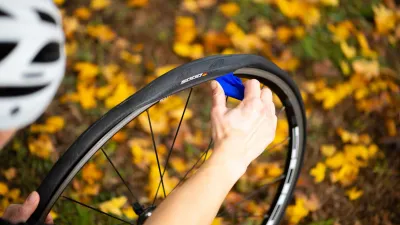
Confirm the tire, rim, tape, and valve form an approved tubeless system. Then check whether the sealant maker approves the tire casing, rim material, injection method, pressure, temperature, and any insert.
Do not mix formulas unless both manufacturers explicitly allow it. When changing products, follow their cleaning instructions. Protect brake rotors, pads, and rim-brake tracks from contamination.
The tubeless installation guide covers system compatibility. Our guide to adding sealant explains the pour and removable-core methods.
1. Best for most riders: Stan’s Original
Stan’s current Original formula record recommends it for tubeless mountain, gravel, and road tires. The manufacturer lists a 2-to-7-month liquid service period, with more frequent monitoring in arid conditions.
That broad intended use makes it the simplest first choice in this group. The 500 ml Amazon variation is enough for multiple normal bicycle applications, though the exact number depends on tire volume and the manufacturer’s chart.

Best for most riders
Stan's Original Tubeless Sealant, 500 ml
4.7 out of 5 (9,148 ratings, as of July 27, 2026)
The most versatile one-formula choice in this comparison.
An all-around latex tubeless bicycle tire sealant.
Best for: General mountain, gravel, cyclocross, commuter, and road tubeless use
Key specifications: 500 ml bottle; valve-injectable with compatible tools; listed 2-to-7-month service period
Trade-off: Hot, dry conditions can require checks sooner than the broad service window.
- Mountain, gravel, and road compatibility
- Valve-injection support with a compatible injector
- Multiple bottle sizes in the product line
Pros
- Broad intended-use range
- Manufacturer publishes volume and maintenance guidance
- Large current retailer rating base
Cons
- Service interval varies widely with conditions
- Particulate formulas can contribute to valve clogging
Considerations
Use Stan's current volume chart and inspect more often in arid conditions or after punctures.
2. Best for longer intervals: Orange Seal Endurance
Orange Seal’s current Endurance record says the formula is designed to extend time between top-offs while retaining quick sealing behavior. It lists 4, 8, 16, and 32-ounce sizes and compatibility with most bicycle tire systems. The exact Amazon ASIN selected here is the 8-ounce version with an injector, not the refill-only variation.
Choose it when maintenance frequency is the deciding factor, not because any sealant can be installed and forgotten. Tire volume, casing porosity, temperature, storage, and puncture history still determine inspection timing.

Best for longer intervals
Orange Seal Endurance Tubeless Sealant, 8 oz with Injector
4.4 out of 5 (487 ratings, as of July 27, 2026)
The clearest choice here when extending time between routine top-offs is the main goal.
A longevity-focused tubeless bicycle tire sealant.
Best for: Riders who prioritize a longer-lasting formula and regular inspection
Key specifications: 8 oz bottle with injector; endurance formula; compatible with most bicycle tubeless systems
Trade-off: Longer-lasting does not remove the need for condition-based checks.
- Endurance-focused formula
- Multiple bottle sizes
- Included injector on this exact variation
Pros
- Designed for longer top-off intervals
- Useful size for a few bicycle applications
- Manufacturer publishes tire-volume guidance
Cons
- Actual interval still changes with climate and casing
- Exact injection compatibility must be checked
Considerations
Inspect before the expected interval when pressure loss rises, the casing is porous, or the bike is stored hot and dry.
3. Best for leak detection: Muc-Off No Puncture Hassle
Muc-Off’s current one-liter MTB formula record includes UV dye intended to make some puncture locations easier to identify under a compatible UV light. The manufacturer lists tubeless-ready and full UST compatibility, a non-corrosive formula, and service up to six months in temperate climates.
The 1-liter bottle suits riders maintaining several wheels or topping up regularly. A small single-bike household may prefer the smaller variation so less product sits in storage.

Best for leak detection
Muc-Off No Puncture Hassle Tubeless Sealant, 1 Liter
4.5 out of 5 (4,913 ratings, as of July 27, 2026)
A practical workshop-size option when the UV detection feature fits the maintenance process.
A particulate tubeless bicycle tire sealant with UV detection dye.
Best for: Frequent MTB maintenance where UV-assisted puncture checks are useful
Key specifications: 1-liter bottle; UV detection dye; tubeless-ready and UST use; temperate-climate service guidance
Trade-off: The large container is unnecessary for riders maintaining only one wheelset.
- UV puncture-detection dye
- Multiple product sizes
- Water-washable, non-corrosive formula
Pros
- Extra aid for finding some leak locations
- Workshop-friendly bottle size
- Published pressure and temperature guidance
Cons
- Requires compatible UV light to use the detection feature
- Large bottle needs proper sealed storage
Considerations
Shake as directed, respect the product's pressure range, and keep the bottle sealed between uses.
How we chose
This is a research-based selection without new hands-on puncture testing. Bright Data verified the exact Amazon ASIN, availability, rating, rating count, variation, and primary image for each recommendation on July 27, 2026. We rechecked current Amazon purchase controls on August 1, 2026. The exact Stan’s 500 ml and Muc-Off one-liter pages exposed current purchase controls; Orange Seal’s exact 8-ounce-with-injector variation exposed Add to Cart and Buy Now. Stan’s, Orange Seal, and Muc-Off supplied intended-use, maintenance, compatibility, and feature evidence.
We selected three formulas with different maintenance reasons to buy. Retailer ratings are shopping signals, not our test scores. We did not rank by claimed maximum hole size because manufacturer test methods and riding conditions are not standardized across these listings.
How much sealant do you need?
Use the selected manufacturer’s current chart. Tire volume changes sharply between road, gravel, cross-country, trail, downhill, and fat-bike tires. Porous new casings may also consume sealant while they become airtight.
Measure the amount rather than listening for an arbitrary slosh. Too little can leave the casing dry; excess adds weight, can pool, and may clog the valve.
How often should you inspect it?
Start with the product’s stated interval, then inspect sooner in heat, arid conditions, porous casings, after punctures, or when pressure loss increases. The dedicated guide to tubeless sealant intervals turns those factors into a maintenance schedule.
Use a compatible dipstick or open-bead inspection rather than assuming that a tire holding air still has enough mobile sealant for the next puncture.
Bottom line
Stan’s Original is the broad all-around pick, Orange Seal Endurance is the longevity-focused choice, and Muc-Off No Puncture Hassle adds UV-assisted leak detection in a workshop-size bottle. The right sealant is the one approved for your full wheel system and maintained on a schedule that matches your climate and riding.