26″ Men’s Granite Peak Bike: Roadmaster Mountain Bike Review
Evaluate a used Roadmaster Granite Peak by fit, frame and fork condition, wheels, brakes, controls, drivetrain, and total repair cost.
A used Roadmaster Granite Peak deserves consideration only after it fits the rider and passes a complete mechanical inspection. Do not rely on a reused model name, an old specification table, a marketplace description, or a seller’s claim that it is ready for trails.
This review is research-based. We did not ride or inspect a Granite Peak. Different sizes, years, and configurations appear in old retailer, reseller, marketplace, video, and owner records, so their specifications cannot be transferred to the bicycle in front of you.
What the bounded search established
In a documented bounded search performed on the retrieval date, we did not establish an authoritative current bicycle-manufacturer record for the Roadmaster Granite Peak. This does not establish discontinued, unsupported, unavailable, or no-longer-sold status.
Condition is the only honest starting point for this used bike.
Appropriate expectations
A sound example may serve on neighborhood streets, paved paths, and firm gravel when it fits and its components work correctly. A suspension-style fork and knobby tires do not prove that a used bicycle is suitable for jumps, drops, bike parks, or fast technical descents.
Do not make it a blind online purchase. Photos can miss cracks, wheel damage, loose bearings, incorrect assembly, weak brakes, and drivetrain wear. If the seller will not allow an inspection, choose another bike.
Fit comes before the “men’s” label
The title preserves the page’s historical identity, but the marketing label does not establish fit. Check standover clearance, reach, saddle-height range, handlebar position, and access to both brake levers. Keep the seatpost beyond its minimum-insertion mark.
Wheel diameter is not frame size. Use the mountain bike buying checklist and arrange a cautious test fit only after the bicycle passes stationary safety checks.
Inspect every safety-critical system
Frame, fork, and suspension
Clean the bicycle enough to see welds, tubes, dropouts, the head tube, bottom-bracket area, and fork. Reject cracks, deep dents, bent members, severe corrosion, separated joints, or damage around a suspension mount.
Hold the front brake and rock the bike lightly. Investigate any knock before riding. Compress the fork while stationary and stop if it binds, leaks, scrapes, shifts at its mounts, or shows unexplained play. An old fork with unknown history is not evidence of aggressive-terrain capability.
Steering
Turn the handlebar through its range and watch the cables. The steering should move smoothly without binding or pulling a cable tight. Confirm the stem and handlebar stay aligned with the front wheel during a cautious stationary check.
Do not ride with a loose headset, stem, handlebar, grip, or damaged steering component.
Wheels and tires
Confirm both wheels use the correct retention parts and are fully secure. Spin each wheel and watch the rim and tire. Stop for a cracked rim, broken spoke, loose hub, damaged axle, large wobble, tire bulge, exposed casing, cut sidewall, or bead that does not sit evenly.
Push each rim sideways at the top to feel for hub play. Our wheel-wobble diagnostic separates common tire, rim, hub, and axle causes.
Brakes
Identify the exact brake system on the bicycle. Inspect pads, cables or hoses, levers, mounts, and braking surfaces. Each lever must stop its wheel before touching the grip.
Once all stationary checks pass, test both brakes at walking speed. Stop if either brake is weak, contaminated, frayed, loose, badly aligned, or unpredictable.
Cranks and pedals
Move the crank arms laterally and rotate both pedals. A loose crank, rough bearing, bent axle, damaged pedal thread, or pedal that can separate from the crank requires repair before riding.
Confirm each pedal is installed on the correct side and both are secure. These are control points, not cosmetic parts.
Drivetrain
Check the chain, chainrings, rear cogs, derailleurs, and cables for rust, wear, bent parts, and poor alignment. Shift through the available range under light pedal pressure only.
Stop when the chain skips under modest load, drops repeatedly, or the rear derailleur can contact the spokes. Several worn drivetrain parts can erase the apparent savings of a low asking price.
Add the full repair estimate
List the immediate needs before agreeing on a price: tires, tubes, wheel work, brake pads and cables, chain and gears, bearings, fork work, assembly correction, and shop labor. Include a professional safety inspection when the history or condition is unclear.
Compare the resulting total with the mountain bikes under $400 guide and mountain bikes under $500 guide. This is a category-cost comparison, not a recommendation to replace inspection with a new-bike listing.
Research and image boundaries
On August 19, 2026, we recorded failure from the configured search endpoint, then used the exact approved live US-English fallback query. The package evidence retains the result URLs, domains, page types, intent composition, and limitations. No fallback result supplied a bicycle specification used in this article.
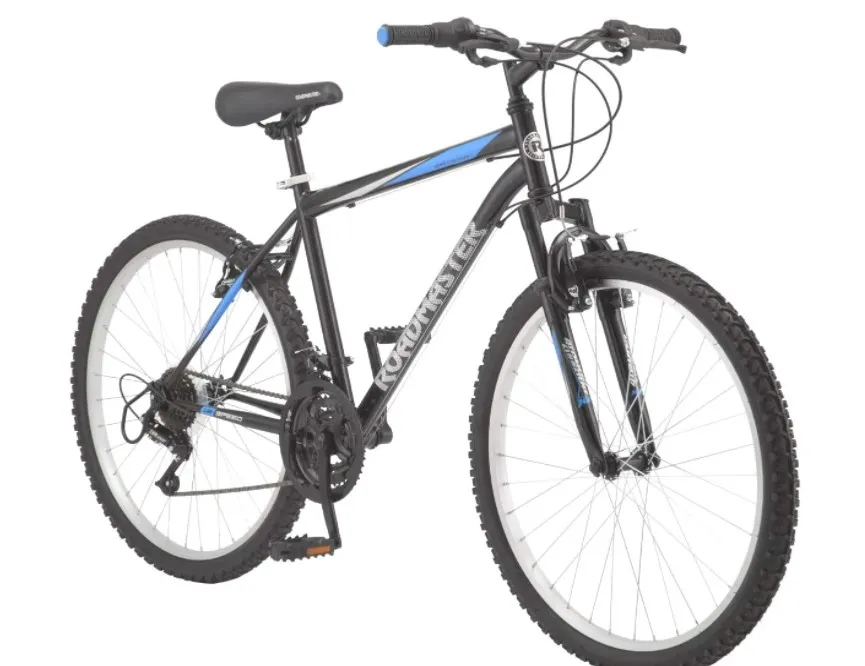
The retained hero is the exact 865 by 666 pixel legacy Roadmaster product image. It identifies the historical subject and has retained checksum provenance. It does not prove the inspected bicycle’s year, variant, condition, current sales status, factory specification, warranty, or a hands-on test.
The CPSC bicycle requirements overview covers assembly, braking, structural integrity, and reflector requirements. It does not certify a used bicycle, and the exact components’ instructions still control service and adjustment.
Verdict
Buy a used Roadmaster Granite Peak only when it fits, passes the frame, fork, suspension, steering, wheel, tire, brake, crank, pedal, and drivetrain checks, and stays inexpensive after necessary repairs. Do not ride a known defect. Avoid aggressive terrain unless a qualified inspection and the exact bicycle’s documentation support that use.