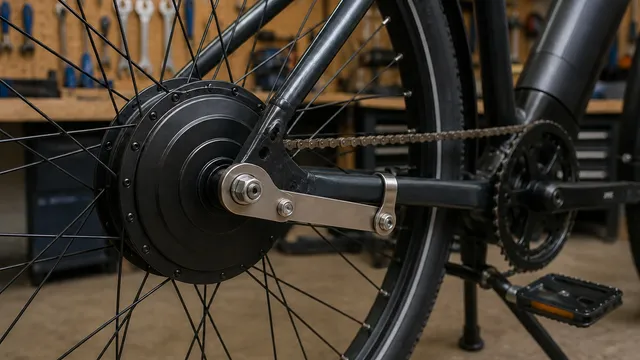
Do You Need a Torque Arm for an E-Bike Conversion Kit?
A hub-motor e-bike conversion may need a torque arm. Match the exact axle, dropout, frame or fork, motor, arm, anchor, hardware, and maker instructions.


127 posts by this author
Jack Carson is the byline attached to BikeRideReview’s legacy article archive. The archive is being reviewed and refreshed using current manufacturer documentation, established repair references, and the site’s editorial policy.
This byline does not imply that every product was personally tested or that every procedure was performed by the author. Individual articles state their evidence limits, and safety-critical work should follow the applicable service manual or be inspected by a qualified bicycle mechanic.
Questions or correction requests can be sent through the contact page.
A hub-motor e-bike conversion may need a torque arm. Match the exact axle, dropout, frame or fork, motor, arm, anchor, hardware, and maker instructions.

Identify visible wear on bicycle rim and disc brake pads, separate warning symptoms from proof, and know when to stop riding for model-specific service.

Choose BMX wheel size first, then compare effective top-tube length. Use current maker charts as starting ranges and confirm standover, reach, and control.
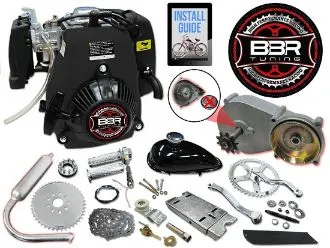
If a motorized bicycle dies under throttle, stop riding and check fuel flow, air restriction, intake sealing, controls, and the exact carburetor procedure.
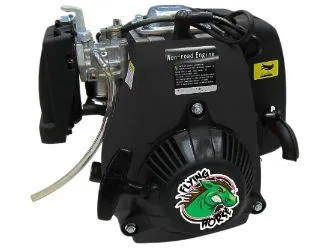
A bicycle engine kit needs frame-maker approval, sound round tubes, enough engine clearance, correct chainline, and brakes and wheels suited to the complete build.
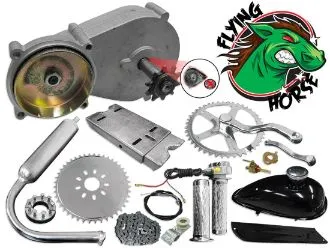
A 4-stroke kit avoids premixed fuel, while a 2-stroke kit is usually the more compact package. Compare fit, starting, drive parts, upkeep, and legality.
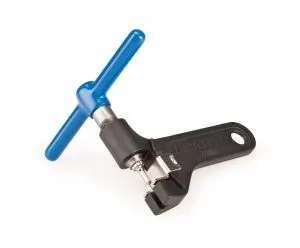
Size a bike chain with the method specified for your drivetrain. Learn the large-to-large and single-speed methods, then verify suspension movement and shifting.
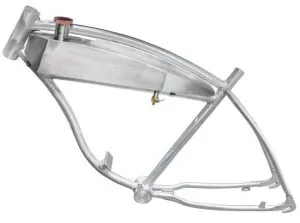
The BBR V1 is the simpler one-piece-top-end kit. Compare it with the V2 reed-valve layout by parts, clearance, service needs, and frame fit.
Replace a bike tire with cut casing threads, a bulge, bead damage, or a growing sidewall tear. Learn what a boot can and cannot do.
No, pegs do not fit every bike. Check BMX axle size, hub hardware, frame approval, and thread engagement before adding pegs to a mountain bike or other bicycle.
Measure bike chain wear with a compatible chain checker or a 12-inch ruler, then follow the drivetrain maker's replacement limit.
There is no universal motorized-bicycle jet size for an elevation. Start from the engine maker's baseline, diagnose mixture, and change one step at a time.