2-Stroke vs. 4-Stroke Bicycle Engine Kits
A 4-stroke kit avoids premixed fuel, while a 2-stroke kit is usually the more compact package. Compare fit, starting, drive parts, upkeep, and legality.
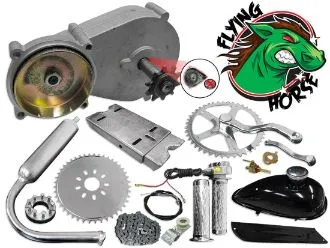
Table of Contents
A four-stroke bicycle engine kit is the better research starting point when you want separate engine oil and gasoline and can accommodate its wider engine and transmission package. A two-stroke kit is usually the more compact and mechanically direct option, but it requires the exact approved oil-and-fuel mixture and still carries substantial installation and compatibility work.
Neither type is automatically safe, legal, quiet, low-maintenance, or suitable for a bicycle frame.
How we compared
Research disclosure: We did not install or performance-test a new pair of kits for this comparison. We reviewed current BikeBerry kit documentation, installation guidance, package architecture, and federal guidance on July 29, 2026. Merchant speed, power, economy, reliability, and fit claims are not independent findings.
The decision at a glance
| Question | 2-stroke kit | 4-stroke kit |
|---|---|---|
| Fuel and lubrication | Uses the maker’s specified oil mixed with gasoline | Gasoline and engine oil are handled separately |
| Package | Often narrower and lighter | Often wider and heavier with a separate transmission |
| Starting | Many kits use clutch-assisted pedal or bump starting | Many current kits use a pull starter |
| Drive system | Engine clutch drives the chain path | Engine connects through a gearbox or transmission |
| Routine attention | Fuel mixture, intake, ignition, exhaust, clutch, chain | Engine oil, valve/service schedule, transmission, belts or clutch, chain |
| Best fit | Builder prioritizing compact packaging | Builder prioritizing unmixed fuel and accepting a larger package |
Exact kit instructions override this table. Electric-start, pull-start, centrifugal-clutch, belt-drive, and chain-drive variations can change the comparison.
Choose by the whole package, not the stroke count
A two-stroke engine completes its operating cycle in two piston strokes and typically uses oil mixed into the fuel for lubrication. Many bicycle kits combine that engine with a manual clutch and direct chain drive.
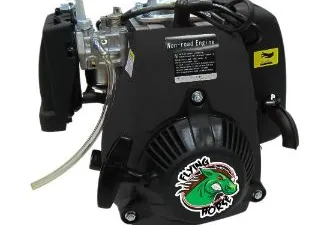
A four-stroke engine completes separate intake, compression, power, and exhaust strokes. Current bicycle kits often add a pull starter, centrifugal clutch, and reduction transmission. Separate engine oil removes fuel mixing, but it adds oil-level and change procedures.
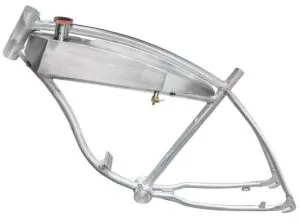
The host bicycle still has to support the mount, heat, vibration, drive alignment, fuel system, controls, wheels, tires, fork, headset, and brakes. Use our frame compatibility guide before comparing performance claims.
Where a 2-stroke kit makes sense
Research a two-stroke first when open-triangle space is limited and the exact kit has a supported, measurable mount for the approved host. The simpler package can make the engine-to-rear-sprocket drive path easier to inventory.
The trade-offs include:
- measuring and mixing only the maker-approved oil and gasoline;
- more sensitivity to carburetor, intake, exhaust, ignition, and mixture setup;
- a clutch and pedal-start sequence on many kits;
- exact top-end and replacement-part identity;
- exhaust smoke and emissions limits;
- frequent inspection for mount, fuel, chain, and fastener problems.
Our current two-stroke kit shortlist compares identifiable packages rather than ranking by claimed top speed.
Where a 4-stroke kit makes sense
Research a four-stroke first when separate engine oil is a priority and the frame can accommodate the engine plus its transmission. A current 49cc pull-start package may offer a more familiar fueling routine than a premix engine.
The trade-offs include:
- greater width and mass in many packages;
- crank, pedal, and rider-leg clearance;
- transmission, belt, clutch, or gearbox service;
- pull-starter and cable clearance;
- engine-oil level and change procedures;
- model-specific mounts and replacement parts.
Our four-stroke engine-kit guide explains why an identifiable, supported package matters more than an unverified “maintenance-free” claim.
Fit and brake checks come first
Stop the project if the frame maker does not approve the conversion, the frame is damaged, the mount requires an unapproved modification, or the bicycle’s brakes, wheels, tires, fork, or headset are unsuitable for the complete system.
Measure:
- frame-tube material, shape, diameter, and open-triangle space;
- engine and spark-plug height;
- carburetor, air-filter, fuel-tank, exhaust, and starter clearance;
- crank, pedal, cable, and rider clearance;
- rear sprocket, chainline, axle, and tensioner alignment;
- four-stroke transmission width or two-stroke clutch-cable routing;
- total loaded mass and intended closed-course surface.
A merchant statement that a kit fits “most 26-inch V-frames” is a screening clue, not bicycle-maker approval.
Starting and low-speed control
Many two-stroke kits use a manual clutch and movement of the bicycle to start the engine. Many four-stroke kits use a pull starter and centrifugal clutch. Verify the exact sequence and make sure the kill switch, throttle return, brakes, and clutch control work before any start.
Do initial checks outdoors in a legal, controlled area away from ignition sources and traffic. Keep hands, clothing, tools, and cables clear of the chain, sprocket, belt, pulleys, clutch, and exhaust.
Maintenance differences
Two-stroke service commonly includes the exact premix, spark plug, air filter, carburetor, intake sealing, exhaust, clutch, chain, mounts, and fasteners. Four-stroke service commonly adds engine oil, valve or engine-service intervals, and a separate transmission or reduction drive.
The correct interval comes from the exact engine and kit instructions. A four-stroke design is not permission to ignore oil, and a simple two-stroke layout is not permission to guess the mixture.
Stop immediately for a fuel or oil leak, sticking throttle, ineffective kill switch, brake weakness, chain or belt interference, loose mount, wheel play, structural damage, abnormal heat, smoke, or vibration.
Legal and emissions limits
BikeBerry says its gasoline-powered products are not EPA or CARB compliant for use on public roads or public off-road areas and sells them for closed-course competition. Changing from two strokes to four does not remove that merchant limitation.
NHTSA has also explained in a past motorized-bicycle interpretation that a self-propelled gasoline bicycle intended for public roads can be a motor-driven cycle. Confirm federal, state, local, land-access, registration, licensing, insurance, equipment, and helmet rules for the exact vehicle and location.
Frequently asked questions
Is a 4-stroke kit always more reliable?
No. Engine architecture alone does not establish product quality, installation quality, transmission durability, parts support, or maintenance history.
Is a 2-stroke kit always faster?
No. Speed depends on displacement, tuning, gearing, wheel size, load, grade, wind, installation, engine condition, and legal and component limits.
Which is easier for a beginner?
Neither should be treated as a beginner bolt-on accessory. A four-stroke avoids premix, while a two-stroke may package more compactly. Both require an approved host, qualified installation, whole-system inspection, and legal use.
Verdict
Choose a four-stroke research path for separate fuel and oil when the larger engine and transmission fit. Choose a two-stroke research path for compact packaging when you can follow the exact premix and clutch procedures. Then compare current models through the motorized bicycle guide and reject any build with unresolved frame, brake, wheel, tire, legal, or installation questions.