Why a Bike Chain Keeps Falling Off
A bike chain can fall off from derailleur limits, poor indexing, chainline, worn teeth, wrong length, or a stiff link. Diagnose where and when it drops.
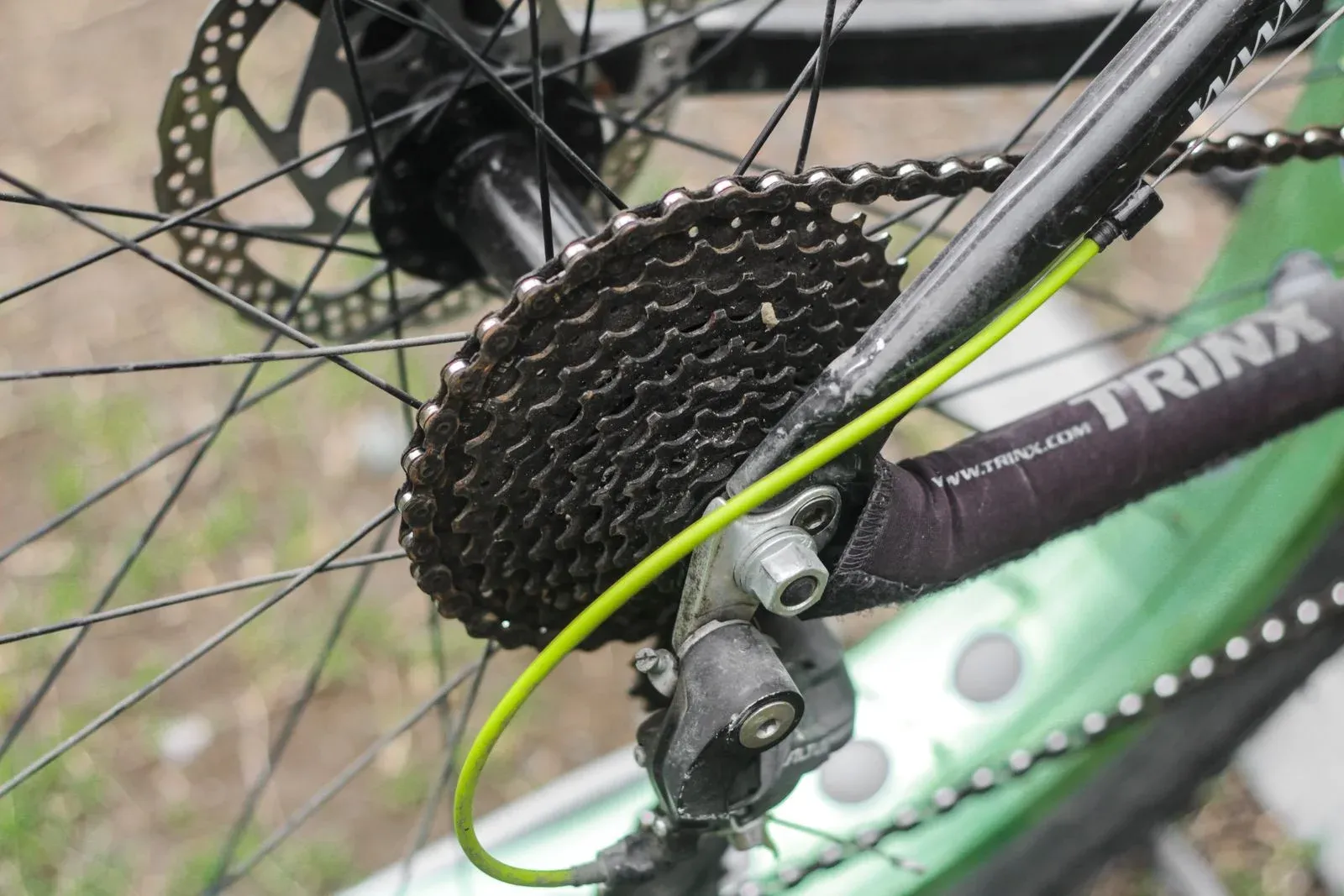
Table of Contents
- Where does the chain fall off?
- Why does a chain fall off the front chainring?
- Why does a chain fall off the rear cassette?
- Why does the chain fall off during shifting?
- Why does a chain fall off on bumps?
- Can a worn chainring or cassette cause chain drops?
- Can a bad chainline make the chain fall off?
- What should you do after a chain drop?
- Frequently asked questions
- How we researched this guide
- Bottom line
- Sources
A bike chain keeps falling off when the chain is not being guided, tensioned, or supported correctly. Common causes include front or rear derailleur limits, poor indexing, a bent hanger, an incorrect chainline, worn or damaged teeth, an incorrect chain length, a stiff link, a loose crank or cassette, and suspension movement. The location and timing of the drop tell you which branch to inspect first.
Stop riding if the chain falls toward the spokes, jams between the chainring and frame, catches a derailleur, or accompanies a loose wheel, loose crank, cracked link, or damaged tooth. Start with the bike drivetrain maintenance hub, then compare the worn chainring guide and cassette wear guide. The chainline guide covers alignment, and the chain-breakage guide covers what to do when the chain is damaged rather than merely displaced.
Key Takeaways
- Diagnose the drop by whether it happens at the front, rear, during a shift, on bumps, while backpedaling, or at the same chain position.
- Do not turn a limit screw at random. First check wheel and crank security, chain routing, chain length, hanger alignment, chainline, tooth condition, and the exact drivetrain manual.
- A chain that repeatedly derails is a control and drivetrain safety issue. Do not test it under hard pedaling or in traffic.
Where does the chain fall off?
The drop location narrows the first inspection:
| Drop location or pattern | First checks | Do not assume |
|---|---|---|
| Outside the largest front chainring | Front derailleur high limit, cage angle, chainline, ring teeth, and cable tension | That a new narrow-wide ring fixes a derailleur setup |
| Inside the smallest front chainring | Front derailleur low limit, cage position, chainline, ring or crank movement | That more cable tension is always the answer |
| Behind the smallest rear sprocket | Rear high limit, hanger, wheel seating, cassette position, and derailleur damage | That the cassette is worn solely because the chain passed it |
| Toward the spokes beyond the largest rear sprocket | Rear low limit, hanger alignment, wheel and cassette security | That riding slowly makes it safe |
| During a rear shift | Indexing, cable or housing, chain length, derailleur, and hanger | That a limit screw can correct indexing |
| On bumps or suspension movement | Chain length, derailleur capacity, chain guide, chainring retention, and suspension position | That the derailleur can absorb every frame movement |
| At one chain position each revolution | Stiff link, bent plate, damaged roller, or bad joining link | That the front or rear derailleur caused it |
Use the symptom, not the loudest noise, to choose the next check. A drop toward the spokes or a chain jam deserves immediate inspection before any adjustment.
Why does a chain fall off the front chainring?
A front drop commonly involves the front derailleur’s position or limits, chainline, chainring or crank movement, a worn or damaged ring, an incorrect chain length, or a chain that is being shifted under a condition the drivetrain does not support. On a 1x system, a guide, ring profile, chainline, suspension movement, or chain tension can matter more than a front derailleur.
With the bicycle stable and the drivetrain unpowered, inspect the ring and chain path through the gears. Look for a cage that is loose, twisted, bent, or visibly too far from the ring. Check the ring bolts and crank interface using the exact maker procedure. The chainring symptom guide explains why hooked teeth, chain suck, and skipping need a full chain and sprocket inspection.
Do not pull a front limit screw outward because the chain dropped inward, or inward because it dropped outward, without identifying the exact derailleur and reading its manual. Shimano’s front derailleur dealer manuals use model-specific mounting, limit, cable, and support procedures (Front Derailleur Dealer Manual, retrieved September 2, 2026). A wrong adjustment can make a drop more likely.
Why does a chain fall off the rear cassette?
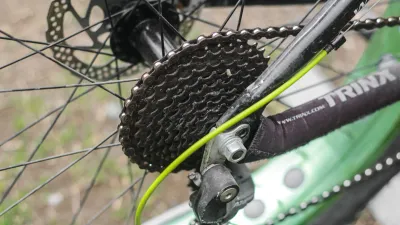
A rear drop can be caused by an incorrect limit setting, a bent derailleur hanger, a derailleur or wheel that is not secured, a loose cassette, incorrect indexing, an incorrect chain length, or damage at the largest or smallest sprocket. If the chain goes toward the spokes, stop immediately. A derailleur near the spokes can be pulled into the wheel.
Check that the wheel is fully seated and retained. Look at the derailleur cage, hanger, pulley alignment, cassette stack, and limit screws without placing hands near a moving wheel. Park Tool’s rear derailleur adjustment guide, retrieved September 2, 2026, explains that limit screws control travel and that indexing depends on cable tension and pulley alignment. It does not make a bent hanger safe to adjust around.
Do not keep shifting to see whether the chain will return. If the cassette or wheel has lateral movement, the hanger is bent, or the derailleur has contacted spokes, use a qualified bicycle technician.
Why does the chain fall off during shifting?
Drops during shifting often mean that the chain is being guided beyond the intended sprocket or ring, the indexing is incorrect, the cable or housing is damaged, or the drivetrain is moving under a load or gear combination it does not support. A shift can expose a pre-existing chainline or tooth problem rather than cause it.
Inspect the simple mechanical conditions first:
- Confirm the chain is routed through the derailleur pulleys and any guide correctly.
- Check that the wheel, crank, cassette, chainring, derailleur, and hanger are secure.
- Look for a bent tooth, stiff link, damaged plate, worn chain, or contaminated chain.
- Identify the exact gear and direction of the failed shift.
- Compare the derailleur’s limits and cable path with its maker’s manual.
- Adjust indexing only after the mechanical parts and alignment are sound.
The mechanical gear adjustment guide covers the inspection sequence. Do not use a random number of turns or a generic screw sequence on a different derailleur family.
Why does a chain fall off on bumps?
Bumps can expose inadequate chain retention, excess chain slack, suspension-driven chain growth, a loose chainring, a poor chainline, or a guide that does not match the drivetrain. A derailleur system may need a manufacturer-specified chain length and capacity, while a single-speed needs correct wheel position and tension. A chain that only drops when the frame moves still needs a mechanical diagnosis.
Check the chain path with the bicycle unloaded, then follow the bicycle or suspension maker’s procedure for the relevant position. Do not compress a suspension system or lift a wheel while fingers are near the chain. A new chain that is too long can leave insufficient tension in some gears; one that is too short can overload the derailleur or chain when the suspension moves.
Use the bike chain sizing guide and record the chain, cassette range, chainring, derailleur, and suspension setup. Never copy an old chain’s length without confirming that the original installation was correct.
Can a worn chainring or cassette cause chain drops?
Yes. Worn or damaged teeth may not guide or release the chain consistently, and the problem can show as chain suck, a skip, or a drop. A worn chain can also mesh poorly with the teeth. Park Tool explains that chain pin and roller wear increases effective pitch and can contribute to poor meshing and chain suck (When to Replace a Chain on a Bicycle, retrieved September 2, 2026).
Inspect both ends of the drivetrain after cleaning. Compare the cassette wear guide if the drop occurs on specific rear sprockets. Do not file teeth, force a chain through a jam, or declare a component sound because it has no obvious shark-fin profile.
Can a bad chainline make the chain fall off?
Yes. A ring, crank, bottom bracket, hub, wheel, spacer, or conversion part can move the chain laterally enough to increase rub or derailment risk. A straight-looking chain in one gear is not proof that the complete permitted range is aligned. Use the bicycle chainline guide to document the interfaces and compare them with maker instructions.
Do not add or remove washers until you know their intended position, thickness, thread engagement, bearing support, and effect on the derailleur or frame. If the chainline changed after a conversion or wheel installation, return to the maker’s compatibility information and have a technician inspect an uncertain interface.
What should you do after a chain drop?
Stop pedaling and move the bicycle away from traffic. Inspect for a cracked or opening link, bent plate, damaged tooth, derailleur contact, wheel movement, chain jam, and scratches or cracks at the frame. If the chain is trapped, do not pull hard against the crank or derailleur. A mechanic should remove a jammed chain when the release path is not obvious.
If there is no damage and the chain can be repositioned without force, use the bicycle maker’s procedure, then inspect the cause before riding. Test only in a controlled area at low load after every safety-critical part is secure. Stop again for any skip, rub, derailment, unusual noise, or movement.
Frequently asked questions
Why does my chain fall off when I shift to the biggest cog?
The rear low limit, hanger alignment, derailleur condition, wheel seating, cassette position, chain length, or indexing may be wrong. Do not shift repeatedly toward the spokes. Stop, secure the bicycle, compare the derailleur with its exact manual, and have a technician check a derailleur that is near or in the spokes.
Why does my chain fall off the smallest front ring?
Check the front derailleur low limit, cage position, cable path, chainline, chainring and crank security, and tooth condition. A front derailleur’s correct settings vary by model. Do not assume that tightening the cable or turning a limit screw is safe without the maker procedure.
Can a new chain stop chain drops?
Only when the old chain was the cause and the new chain is correctly matched, sized, joined, and routed. A new chain cannot repair a bent hanger, poor chainline, worn teeth, loose cassette, incorrect limit, or damaged derailleur.
Is chain drop normal on a 1x drivetrain?
No. A 1x drivetrain may use a chainring profile, guide, clutch derailleur, or chainline intended to improve retention, but a repeated drop still indicates a setup, wear, damage, or compatibility issue. Follow the exact component instructions.
Can backpedaling make the chain fall off?
It can reveal chainline, cassette, derailleur, chain length, or freehub behavior, especially on a wide-range drivetrain, but do not treat backpedaling as a universal test. If the chain drops during ordinary riding, diagnose the complete system rather than changing technique to hide it.
Should I keep riding if the chain falls off only once?
Not until you inspect it. One drop can follow a single bad shift, but it can also reveal a loose part, bent hanger, damaged tooth, or incorrect limit. Stop for any damage, drop toward the spokes, chain jam, or repeated symptom.
How we researched this guide
This is research-based troubleshooting, not a ride test or claim about a particular bicycle. DataForSEO research on September 2, 2026 showed informational demand around prevention, front and rear drops, and causes during gear changes. We used Park Tool and Shimano adjustment guidance to organize the diagnostic branches while leaving exact limits, chain lengths, component fits, and service values to the relevant maker.
Bottom line
Find where and when the chain falls off, then inspect security, routing, wear, chainline, derailleur limits, indexing, chain length, and component compatibility in that order. Do not load a chain to reproduce a drop or turn screws without the component manual. Stop riding for a spoke-side derailment, jammed chain, loose wheel or crank, damaged tooth, cracked link, or uncertain drivetrain repair.
Sources
- Park Tool, “Rear Derailleur Adjustment,” retrieved September 2, 2026, https://www.parktool.com/en-int/blog/repair-help/rear-derailleur-adjustment
- Park Tool, “Front Derailleur Adjustment,” retrieved September 2, 2026, https://www.parktool.com/en-int/blog/repair-help/front-derailleur-adjustment
- Park Tool, “When to Replace a Chain on a Bicycle,” retrieved September 2, 2026, https://www.parktool.com/en-us/blog/repair-help/when-to-replace-a-chain-on-a-bicycle
- Shimano, “Front Derailleur Dealer Manual,” retrieved September 2, 2026, https://si.shimano.com/en/pdfs/dm/RAFD011/DM-RAFD011-02-ENG.pdf
- Shimano, “General Operation,” retrieved September 2, 2026, https://si.shimano.com/en/pdfs/dm/GN0001/DM-GN0001.pdf