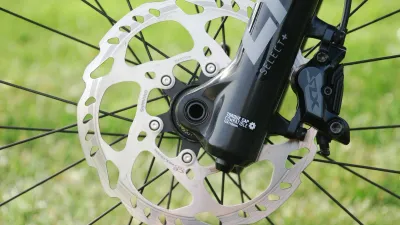
Bike Disc Brake Rotor Size Guide
Choose a bike disc brake rotor size by checking the exact fork, frame, caliper, hub, adapter, pad, and maker limits before changing diameter.
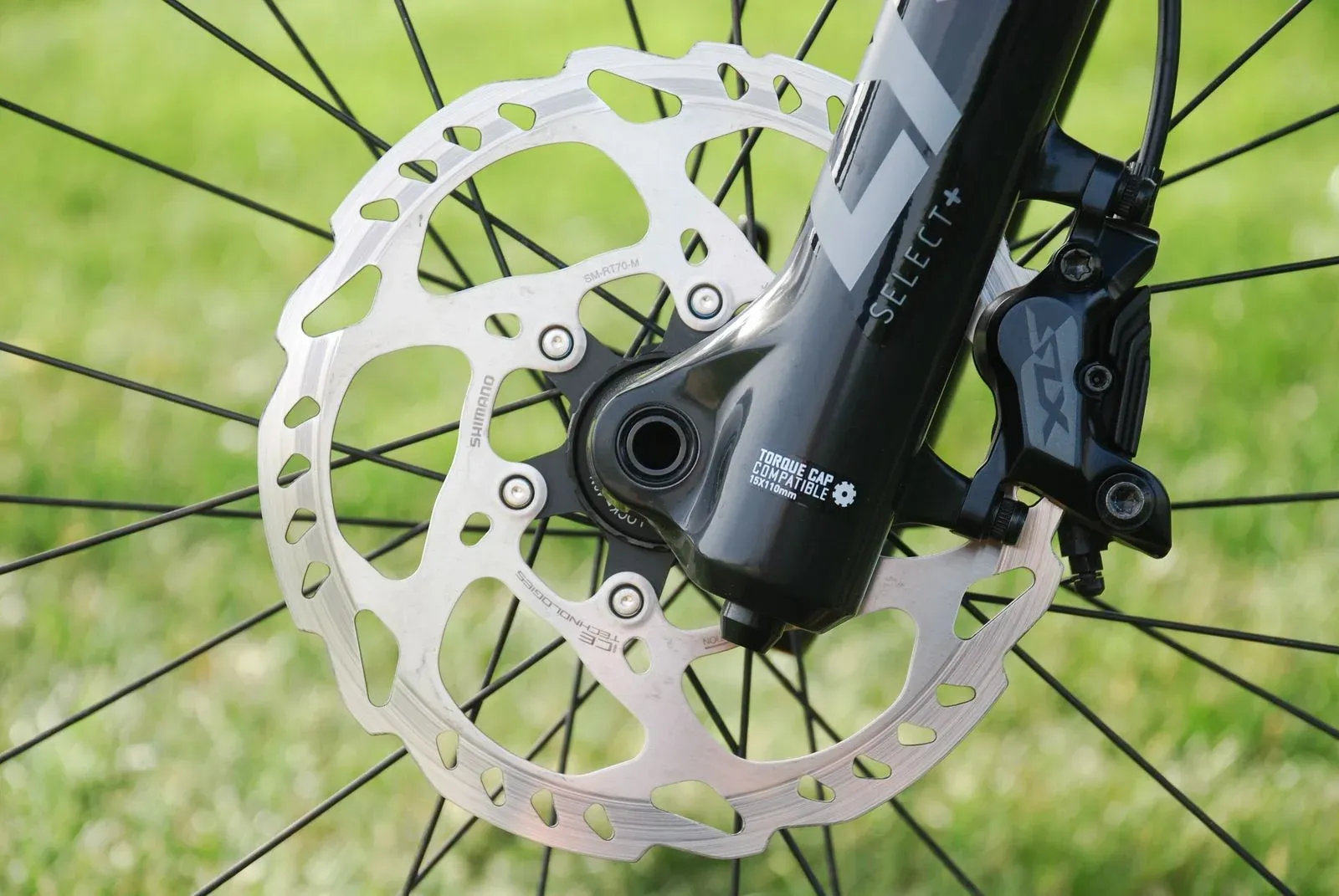
Table of Contents
- What does bike disc brake rotor size mean?
- Which rotor sizes are common?
- How do you measure a bike brake rotor?
- How do mount style and adapter affect size?
- Should you choose a larger rotor?
- Should you choose a smaller rotor?
- How should front and rear rotor sizes be chosen?
- How do pad and rotor compatibility fit together?
- How do you install a different rotor size?
- Rotor-size decision worksheet
- Frequently asked questions
- Is a bigger bike rotor always better?
- Can I use any 160 mm rotor on my bike?
- How do I know what size rotor my bike has?
- Can I put a 180 mm rotor on a 160 mm setup?
- Do hydraulic and mechanical brakes use different rotor sizes?
- Does a larger rotor stop a bike faster?
- Should the front rotor be larger than the rear?
- Product selection
- How we researched this guide
- Bottom line
- Sources
The correct bike disc brake rotor size is the diameter approved for the exact fork or frame, caliper, adapter, hub, rotor thickness, pad, wheel, and intended use. Common printed examples include 140, 160, 180, and 203 millimeters, but a number that fits the hub is not automatically approved for the bicycle. Read the maker’s documentation before changing diameter.
Rotor size is a system decision
Do not install a larger or smaller rotor because it is available or because a chart for another fork, frame, or brake says it fits. Stop for a cracked, badly bent, loose, contaminated, or below-limit rotor, a loose wheel or caliper, an adapter that is not documented, or any change in braking. Use the exact maker procedure or a qualified mechanic.
What does bike disc brake rotor size mean?
Rotor size normally refers to the disc’s outside diameter. SRAM explains that diameter changes the leverage available at the caliper and can affect stopping power and heat management in its rotor overview (retrieved September 2, 2026). That maker explanation describes a design effect, not a promise that a larger rotor is safer or better on every bicycle.
The bike tire and tubeless wheel guide covers wheel and tire fit that must be preserved when a rotor changes. Rotor choice also depends on the braking system, mounts, axle, tire clearance, fork or frame rating, pad compound, and rider or system limits.
Which rotor sizes are common?
Manufacturers offer several diameters. Shimano’s brake guide discusses 140, 160, 180, and 203 millimeter rotors as examples and explains that bigger is not always better (retrieved September 2, 2026). These are examples from Shimano’s guide, not a universal front or rear chart.
| Printed diameter | What it can change | What it does not prove |
|---|---|---|
| 140 mm | A smaller diameter may suit an approved compact system | It is not approved for every frame, fork, or brake |
| 160 mm | A common reference size in many product families | It is not a universal default or upgrade |
| 180 mm | More leverage and heat capacity may be available when documented | It is not automatically safe on a fork rated for another size |
| 203 mm | A larger option in some documented systems | It cannot be installed from diameter alone |
Do not treat the table as a compatibility chart. The exact rotor, caliper, mount, adapter, fork, frame, and manual control.
How do you measure a bike brake rotor?
Use the rotor marking or the maker’s documented measurement method before ordering. A diameter marking may be on the rotor spider or braking disc, but wear, dirt, a replacement part, or a partial view can make visual identification unreliable.
If the marking is absent, keep the wheel secured and use a suitable measurement method that does not touch or deform the braking surface. Do not use a ruler reading as the only compatibility proof. Record:
- outside rotor diameter;
- rotor thickness and minimum thickness marking or manual value;
- six-bolt or Centerlock mounting interface;
- rotor model and pad compatibility;
- front or rear position;
- caliper model and mount standard;
- fork or frame approved rotor range;
- adapter model and mounting orientation;
- axle, hub, wheel, tire, and fender clearance.
If the rotor is cracked, sharply damaged, severely bent, loose, contaminated, or below the exact maker limit, stop instead of measuring it for reuse. The brake-pad wear guide covers the related pad condition check.
How do mount style and adapter affect size?
Rotor diameter and rotor attachment are separate decisions. Six-bolt rotors use a bolt pattern, while Centerlock rotors use a splined hub interface and lockring. SRAM’s rotor overview identifies both mounting styles and directs selection to the compatible system. Do not put a six-bolt rotor on a Centerlock hub or use an adapter that the maker does not document.
The caliper mount also needs the correct adapter for the chosen diameter. Adapter orientation, bolt length, spacer arrangement, fork or frame mount, rotor thickness, and caliper clearance are model-specific. Never add washers, machine a mount, remove a retention feature, or copy a torque value from another adapter.
The front-wheel installation guide for disc-brake bikes provides wheel-retention context. A rotor can be the right diameter and still rub because the wheel, axle, hub, caliper, or adapter is wrong.
Should you choose a larger rotor?
Choose a larger rotor only when the exact fork or frame, brake maker, caliper, rotor, adapter, hub, wheel, and intended use all approve it. A larger diameter can change lever feel, caliper leverage, heat behavior, weight, clearance, and mount load. Those changes may be desirable in a documented system and inappropriate in another.
Do not use a larger rotor to cure a soft lever, rubbing, a leak, worn pads, a loose wheel, or a bent mount. Find the cause first. The brake lever diagnostic guide explains why long travel is a stop condition rather than an upgrade prompt.
Check:
- The fork or frame manual’s maximum approved diameter.
- The brake maker’s approved rotor and adapter combinations.
- Caliper, pad, and rotor thickness compatibility.
- Tire, wheel, fender, axle, and frame or fork clearance.
- Intended use, load, speed, terrain, and heat guidance.
- Model-specific fastener, adapter, and bedding instructions.
If any item is undocumented, do not make the change. Ask the fork, frame, brake, or component maker, or use a qualified mechanic.
Should you choose a smaller rotor?
A smaller rotor may be the approved option for a compact frame or fork, but changing down can also change lever feel, available leverage, heat behavior, and the brake maker’s intended setup. It is not a way to solve rubbing or a rotor that is too close to another component.
Confirm the pad’s swept area, caliper compatibility, adapter, mount, and minimum rotor size. A smaller rotor can also be wrong for an e-bike, cargo load, downhill use, or a brake family that specifies another diameter. The hydraulic-versus-mechanical brake comparison explains why actuation type does not replace system compatibility.
How should front and rear rotor sizes be chosen?
Do not apply a universal front-to-rear ratio. Manufacturers may approve different sizes at each position, but the correct choice depends on the exact frame, fork, caliper, rotor, tires, load, terrain, and use category. Shimano’s guide discusses how braking forces and component choice vary with the bicycle and use, while its model manuals provide the controlling limits.
Record the front and rear specifications separately. A front rotor approved on one fork is not automatically approved on the rear frame, and a rear adapter is not automatically reversible. Check each wheel, mount, rotor, caliper, pad, axle, and cable or hose route.
How do pad and rotor compatibility fit together?
A rotor diameter does not identify the right pad. Confirm pad shape, backing plate, compound, rotor thickness, braking track, and caliper model. SRAM notes that changing pad compound can have rotor implications for some systems, so use the exact brake documentation instead of assuming that any disc pad will bed onto any rotor.
Keep oil, grease, chain lube, sealant, and fingerprints off the braking surface. Do not use unapproved cleaners or silencing agents. If a pad or rotor is contaminated or damaged, follow the maker’s replacement and cleaning guidance. Use the disc-brake pad replacement tutorial for the identification, retainer, wheel, and bed-in sequence.
How do you install a different rotor size?
Use the exact rotor, hub, fork, frame, caliper, adapter, pad, and wheel instructions. Turn off an e-bike and follow its battery guidance before wheel or brake work. Let the rotor cool, protect a hydraulic lever with the approved pad spacer when the wheel is out, and keep the braking surface clean.
Install the documented rotor and adapter in the specified orientation and sequence. Use only the maker’s fasteners and torque. Do not infer a value from a bolt diameter or a similar brake. Reinstall the wheel by its exact axle procedure, check rotor and caliper clearance, operate the lever gradually, and inspect for leaks, loose hardware, abnormal noise, or a change in feel.
Bed in new pads or a new rotor using the brake maker’s procedure. The bent rotor guide covers when a damaged disc is a repair or replacement decision. If the rotor rubs after an approved installation, use the rubbing disc-brake guide and stop for heavy contact, weak braking, a loose wheel, or damage.
Rotor-size decision worksheet
Before buying, write down:
| Check | Exact answer to record |
|---|---|
| Position | Front or rear |
| Current rotor | Model, diameter, thickness, mount |
| New rotor | Model, diameter, thickness, compound approval |
| Caliper | Maker and model |
| Mount and adapter | Frame or fork standard, adapter, orientation |
| Wheel interface | Hub, axle, six-bolt or Centerlock |
| Clearance | Tire, fender, fork, frame, caliper, spokes |
| Limits | Maker’s diameter, thickness, load, and use guidance |
| Service | Tools, fasteners, torque, cleaning, and bed-in instructions |
If you cannot fill every row from reliable documentation, pause the purchase. An exact part number or qualified inspection is cheaper than guessing with a safety-critical component.
Frequently asked questions
Is a bigger bike rotor always better?
No. A larger rotor can change leverage and heat management, but it may exceed a fork or frame limit, require a different adapter, alter clearance, or be incompatible with the caliper. Choose only from the exact maker-approved system.
Can I use any 160 mm rotor on my bike?
No. Diameter alone does not establish thickness, mount style, braking track, pad approval, hub interface, adapter fit, or fork and frame approval. Confirm the rotor model and complete system documentation.
How do I know what size rotor my bike has?
Look for the diameter marking on the rotor or use the maker’s documented measurement method, then confirm the part number, mount, thickness, caliper, and bicycle position. Do not rely on a ruler or photograph alone when buying a replacement.
Can I put a 180 mm rotor on a 160 mm setup?
Only when the exact fork or frame, caliper, adapter, rotor, wheel, and maker instructions approve that combination. You may need a documented adapter and different pad or rotor checks. Do not add random washers or copy a torque value.
Do hydraulic and mechanical brakes use different rotor sizes?
Rotor size is not determined by hydraulic or mechanical actuation alone. Both types use model-specific rotor, pad, caliper, mount, and bicycle limits. The exact brake and bicycle makers control.
Does a larger rotor stop a bike faster?
Do not promise a stopping distance from diameter alone. Rotor diameter changes leverage and can affect heat behavior, but tires, surface, load, brake condition, setup, and rider input also matter. Never use a larger rotor to justify higher speed or a damaged brake.
Should the front rotor be larger than the rear?
Some makers approve different front and rear sizes, but there is no universal ratio. Confirm each fork, frame, caliper, rotor, adapter, wheel, and intended-use limit separately.
Product selection
These examples were selected from Bright Data Amazon listing and specification research retrieved September 2, 2026. This is not hands-on testing. Rotor diameter, thickness, mount, adapter, caliper, fork, frame, and wheel compatibility remain model-specific, so verify every measurement with the component makers.
6-bolt rotor example
Teyssor 140mm 160mm 180mm 203mm Bike Disc Brake Rotor with 6 Bolts Fit for Road Bike Mountain Bike BMX MTB
A reference example for checking the complete rotor interface
Selected from the verified Teyssor listing. Confirm the exact size and rotor specification before installation.
Best for: Readers comparing a stated 6-bolt rotor size with their hub and brake system
Key specifications: Listing identifies a 160 mm rotor, 44 mm center distance, 1.9 mm thickness, and six screws
Trade-off: A diameter and bolt-count match does not establish thickness, caliper clearance, or maker approval
Check price on AmazonMulti-size 6-bolt example
BUCKLOS RT58 MTB 140mm 160mm 180mm 203mm Bike Disc Brake Rotor with 6 Bolts
A reference example, not permission to change rotor diameter on an existing bike
Selected from the verified BUCKLOS listing. Confirm the chosen variant, thickness, mount, and maker approval.
Best for: Readers comparing several listed diameters within a 6-bolt rotor family
Key specifications: Listing identifies 140, 160, 180, and 203 mm options, stainless steel construction, and six bolts
Trade-off: Several size choices increase the need to verify the selected variant and all clearance limits
Check price on AmazonHow we researched this guide
This is research-based rotor-selection guidance, not a hands-on installation, braking, heat, stopping-distance, weight, clearance, or durability test. We reviewed SRAM’s rotor overview, Shimano’s brake guide and model documentation, Park Tool’s brake and wheel references, and BikeRideReview’s wheel and brake articles on September 2, 2026. We did not invent a universal rotor size, adapter, torque, thickness, clearance, load, or stopping result.
Bottom line
Choose rotor diameter from the complete approved system, not from a number alone. Confirm the position, mount, thickness, pad, caliper, adapter, fork or frame, wheel, clearance, and intended use. Stop for damage, looseness, changed braking, or undocumented compatibility.
Sources
- SRAM, “Rotor Overview,” retrieved September 2, 2026, https://www.sram.com/en/learn/brake-welcome-guide/rotor-overview
- Shimano, “The Easy-to-Understand Guide to Brakes,” retrieved September 2, 2026, https://bike.shimano.com/en-AU/stories/article/the-easy-to-understand-guide-to-brakes.html
- Shimano, “Hydraulic Disc Brake User Manual,” retrieved September 2, 2026, https://si.shimano.com/en/pdfs/um/8VR0A/UM-8VR0A-009-ENG.pdf
- Park Tool, “Disc Brake Rotor Truing,” retrieved September 2, 2026, https://www.parktool.com/en-us/blog/repair-help/disc-brake-rotor-truing